AC Drain Line Overflow Water Damage Cleanup in Wilmington, NC
AC drain line overflow cleanup in Wilmington, NC addresses the water damage that occurs when an air conditioner's condensate drain line clogs and the drain pan overflows. Because HVAC systems often sit in utility closets or attics above finished ceilings, overflow water can travel through drywall, into ceiling cavities, and across flooring before it is discovered. Our team removes the standing water, traces how far moisture has migrated, and sets up controlled drying for affected materials.
How AC Drain Line Overflows Cause Hidden Water Damage
Air conditioning systems remove humidity from indoor air, and that moisture—condensate—collects in a drain pan beneath the air handler and flows out through a drain line. When that drain line clogs with debris, the pan fills and overflows. In Wilmington's humid coastal climate, AC systems run frequently during warmer months, which means a clogged drain can produce a steady volume of overflow water over a short period.
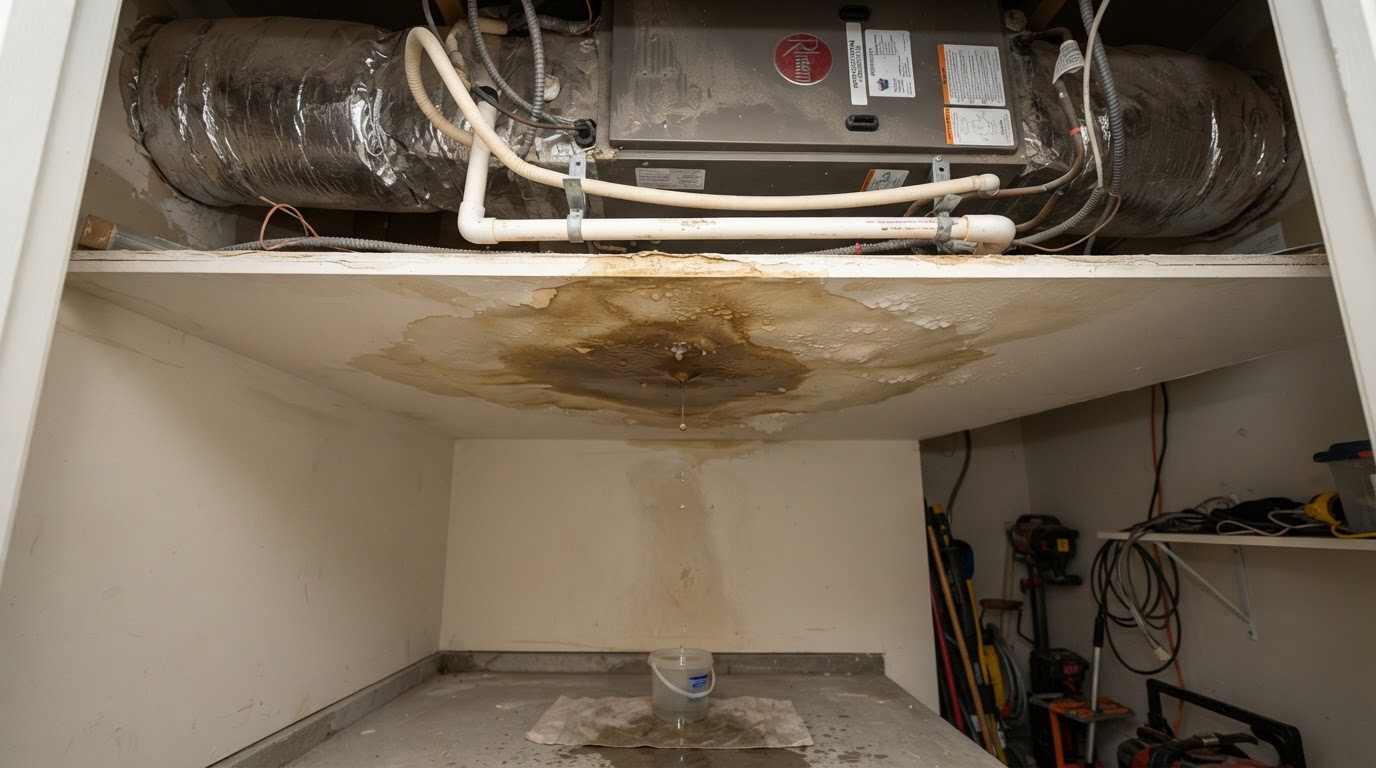
Where the overflow appears depends on where the air handler sits. In a utility closet, water spills onto the closet floor and can travel into adjacent rooms and beneath baseboards. In an attic, water soaks into the ceiling drywall below, often appearing as a stain, sag, or drip. In a ceiling-mounted system, water can spread through the ceiling cavity before showing any visible sign.
Because the overflow is slow and continuous, it can run for hours or days before discovery—especially in attics or closets that are not visited daily. By the time a ceiling stain appears or water is found on a floor, moisture has often traveled through drywall, into insulation, and along ceiling framing. The visible sign is frequently a small fraction of the actual affected area.
Clogged Condensate Drain Lines
Debris buildup in the condensate drain line blocks flow, causing the drain pan to fill and overflow onto the surrounding surface.
Drain Pan Overflow
When the drain line is blocked, the pan beneath the air handler overflows and water spills onto the floor, ceiling, or cavity below.
Air Handler Area Leaks
Water that overflows in a utility closet can travel into adjacent rooms, beneath baseboards, and into flooring and wall cavities.
Ceiling Staining Below Systems
Overflow from an attic or ceiling-mounted air handler soaks into the ceiling drywall below, appearing as stains, sagging, or drips.
Our AC Drain Line Water Cleanup Process in Wilmington, NC
After an AC drain line overflow, the cleanup process focuses on removing water and addressing moisture that has moved through ceiling drywall, into insulation, and across flooring. The clogged drain line should be cleared before or alongside cleanup; HVAC repair is handled by the appropriate qualified trade. Our work addresses the resulting water damage.
Evaluate the Water Loss
We assess the visible water, the air handler location, and whether moisture has migrated into ceiling drywall, insulation, walls, or flooring.
Confirm the Source Is Addressed
Water cleanup proceeds once the drain line is cleared or the HVAC system is repaired. HVAC repair is handled by the appropriate qualified trade.
Remove Standing Water
Extraction equipment removes visible water from floors, utility closet surfaces, and any accessible ceiling or cavity areas.
Inspect Moisture Migration
Moisture meters check ceiling drywall, insulation, wall cavities, and flooring to locate hidden water that has traveled from the overflow point.
Establish Drying Conditions
Air movers and dehumidifiers are positioned to encourage controlled evaporation from wet drywall, insulation, and structural materials.
Monitor Structural Materials
Moisture readings are tracked over time so the drying strategy can be adjusted as ceiling drywall and insulation release moisture.
Complete Final Moisture Evaluation
Equipment is removed once affected materials reach appropriate moisture levels based on comparison readings from unaffected areas.
Why AC Condensate Overflows Damage Ceilings and Walls
AC drain line overflows create hidden moisture problems because the source sits above finished spaces. When an attic air handler overflows, water soaks into the ceiling drywall below and into the insulation above that drywall. Ceiling drywall can absorb a surprising amount of water before showing a visible stain, and by the time sagging or dripping appears, the drywall and the insulation above it may both be saturated.
In utility closets, overflow water travels from the closet floor into adjacent rooms, beneath baseboards, and into wall cavities. The slow, continuous nature of the overflow means water can follow these paths for an extended period. Ceiling framing and wall plates where the assembly meets can also absorb and hold moisture after the visible surface dries.
Moisture detection maps the full extent of the loss. Readings on ceiling drywall, in the cavity above, along walls, and across flooring show whether water has traveled beyond the visible stain. Not every wet material can always be saved—saturated ceiling drywall or compressed insulation may require removal based on their condition.
AC Drain Line Water Damage FAQs for Wilmington Property Owners
Need AC Drain Line Water Damage Cleanup in Wilmington, NC?
If a clogged AC condensate drain line has caused ceiling or floor water damage, call to check current service availability. From water removal to drywall and ceiling drying, our Wilmington team can help.