Flood Damage Cleanup in Wilmington, NC
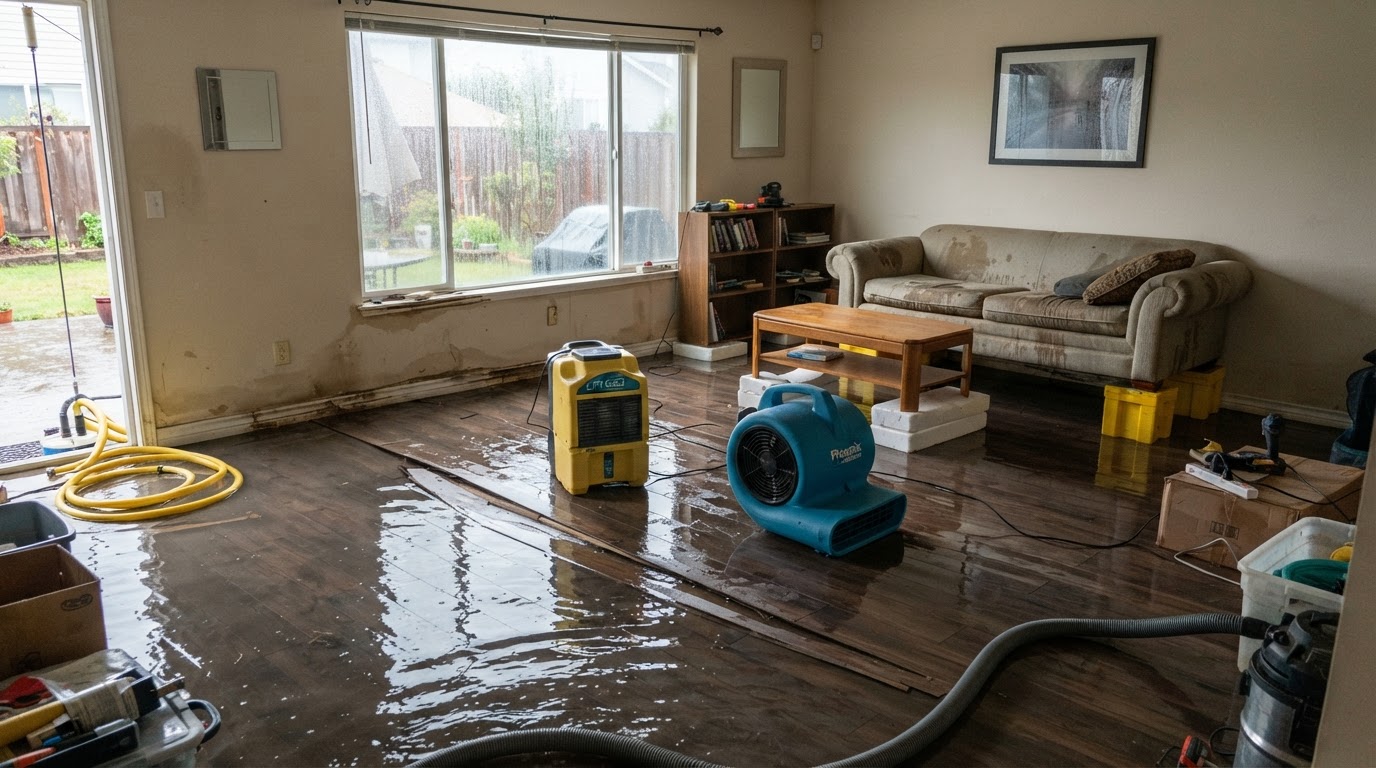
Flood damage cleanup in Wilmington, NC addresses water that has entered a property from exterior sources—heavy rainfall, storm-related intrusion, and drainage problems. Floodwater behaves differently than a clean plumbing leak because it can carry contamination and affect broad areas of flooring and lower wall sections. Our team assesses the water source, removes standing water, evaluates affected materials, and begins controlled drying for Wilmington properties.
Common Flood Damage Problems Near Wilmington, NC
Wilmington's coastal location means heavy rainfall and tropical weather are part of the climate. When drainage can't keep up, or when storm conditions drive water through a compromised opening, exterior water enters the structure and spreads across flooring and up into lower wall sections. Unlike a clean plumbing leak, floodwater originating from outside can carry soil, debris, and biological contamination, which affects how the cleanup is approached.
The source and type of floodwater matter because they determine the water category and the precautions required. Water from a clean interior source is handled differently than water that has traveled over ground or through exterior openings. Contamination considerations shape whether affected porous materials can be dried in place or require removal, and they influence the cleaning and sanitation steps that follow extraction. This is why water-source assessment happens early in the process.
Floodwater often affects broad, continuous areas—entire rooms of flooring, lower wall sections, and the cavities behind them. Because the water enters from outside and spreads across surfaces, the affected footprint can be larger and more uniform than a localized plumbing failure. If it is safe to do so, avoiding entry into standing floodwater is advisable, particularly when the depth or source is unknown or when electrical hazards may be present.
Heavy Rainfall
Sustained or intense rainfall that overwhelms drainage allows water to enter through openings, foundations, or low-lying entry points and spread across flooring.
Storm-Related Intrusion
Coastal storms and tropical weather can drive water through compromised openings, around doors, and through building assemblies into interior spaces.
Drainage Problems
Poor site drainage, clogged systems, or grading issues allow water to pool against the structure and find paths inward during heavy rainfall events.
Contamination Considerations
Exterior floodwater can carry soil and biological contamination, which changes how affected porous materials are handled and what cleaning steps follow extraction.
Our Flood Damage Cleanup Process in Wilmington, NC
Flood damage cleanup follows a sequence that begins with water-source assessment, then moves through standing water removal, contamination considerations, affected-material evaluation, drying, and cleaning. Because floodwater can carry contamination, the source assessment shapes every step that follows.
Water-Source Assessment
We identify where the water entered and evaluate its category, since exterior floodwater can carry contamination that changes how affected materials are handled.
Standing Water Removal
Extraction equipment removes floodwater from flooring and low areas, halting ongoing absorption into subflooring, drywall, and the cavities behind lower walls.
Contamination Considerations
Where the water category requires it, appropriate cleaning and material-handling precautions are applied, consistent with how contaminated water is addressed.
Affected-Material Evaluation
We evaluate which materials can be dried in place and which porous materials may require removal based on the water category and extent of saturation.
Drying
Air movers and dehumidifiers draw remaining moisture out of materials that can be saved, with equipment positioned across the full affected footprint.
Cleaning & Monitoring
Affected spaces are cleaned appropriately for the water category, and moisture readings track drying progress until materials reach target levels.
How Floodwater Moves Through a Wilmington Property
Floodwater that enters from outside spreads across flooring and wicks upward into lower wall sections, baseboards, and the drywall behind them. Drywall acts like a sponge, drawing water upward through capillary action, which is why flood damage often shows a visible wick line on walls even after the floor appears dry. The insulation inside those lower wall cavities can also saturate, holding moisture against framing that surface drying cannot reach.
Subflooring beneath flooring is a primary concern in flood damage. Water that covers flooring saturates the subfloor below, and because flooring materials like hardwood, laminate, and tile can trap moisture beneath them, the subfloor may remain wet long after the surface dries. Moisture meters check subfloor conditions directly, since visual inspection of the floor surface does not reveal what is happening underneath.
Because floodwater can carry contamination, not all affected porous materials can be dried in place—some may require removal depending on the water category. This differs from a clean-water loss where drying in place is often viable. For related losses, see our emergency water extraction and storm and hurricane water damage restoration services, or learn about structural drying. Where contamination is a factor, sewage backup cleanup applies. For below-grade water, see sump pump failure cleanup and crawl space water damage.
Flood Damage Cleanup FAQs for Wilmington Property Owners
Need Flood Damage Cleanup Near Wilmington?
If floodwater has entered your property, call to check current service availability. From water-source assessment to standing water removal and structural drying, our Wilmington team can help address the loss.