Sump Pump Failure & Water Cleanup in Wilmington, NC
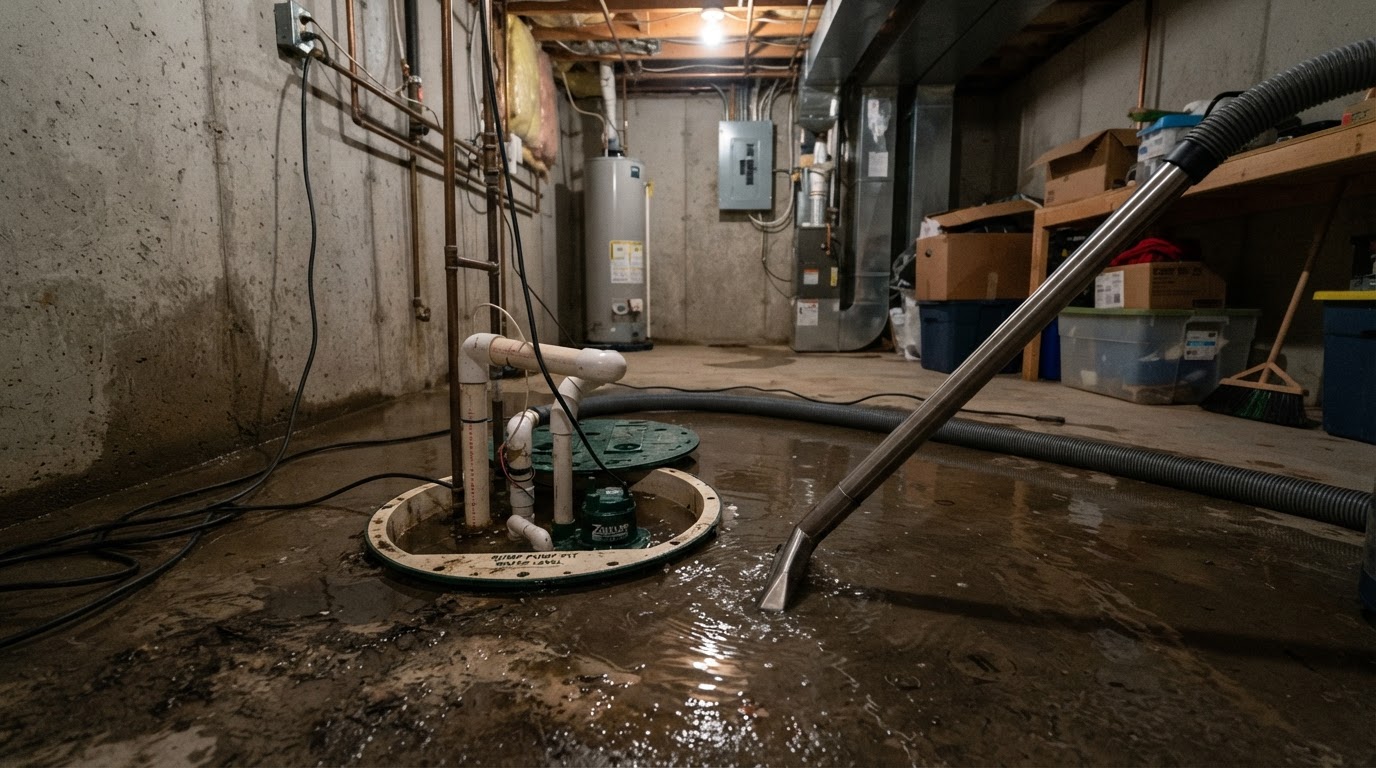
Sump pump failure cleanup in Wilmington, NC addresses the standing water that can accumulate in a lower level, crawl space, or basement area when a sump system stops removing water as intended. When a pump fails or is overwhelmed, water can pool quickly across flooring and migrate into drywall, insulation, framing, and the subfloor above. Our team focuses on removing the standing water, locating moisture that has traveled beyond the visible pooling, and setting up controlled drying to address affected materials.
What Happens When a Sump Pump Fails in a Wilmington Property?
Not every Wilmington property relies on a sump system, but where one is present—typically in a crawl space, lower level, or area prone to groundwater collection—a failure can introduce a significant volume of water in a short period. Because the water often collects in a space that is not visited daily, the loss may go unnoticed until the water has already spread across the floor and into porous materials.
Several conditions can contribute to a sump pump failure. A power interruption can stop the pump during the exact conditions it was installed to handle. A float or switch that has drifted out of position may prevent the pump from activating. In heavy drainage conditions, a properly functioning pump can simply be overwhelmed by the volume of water entering the area. In each case, the result is standing water that needs to be removed and materials that need to be evaluated for moisture.
Because water in a lower level often contacts wood framing, insulation, and the underside of the subfloor, the visible puddle is only part of the problem. Moisture can wick upward into the subfloor and even into finished flooring above, or travel along the top of a vapor barrier toward unaffected areas. Identifying how far the water has migrated is a key part of planning the drying strategy.
Power Interruption
A loss of power can stop the pump during heavy rainfall or groundwater conditions, allowing water to accumulate while the system is offline.
Float or Switch Issues
A float that has shifted or a switch that has stopped responding can prevent the pump from activating even when water is present in the basin.
Overwhelmed Drainage
During heavy rainfall or saturated ground conditions, water may enter the area faster than the pump can discharge it, leading to pooling.
Discharge Line Problems
A blocked, frozen, or disconnected discharge line can prevent water from leaving the property, causing it to back up into the protected area.
Our Water Cleanup Process After Sump Pump Failure Near Wilmington, NC
After a sump pump failure, the restoration process focuses on removing the standing water and then addressing the moisture that has moved into surrounding materials. The source of the water should be stopped or the pump restored before or alongside the cleanup; depending on the cause, that may require the appropriate qualified trade. Our work addresses the resulting water damage.
Evaluate the Water Loss
We assess the extent of the standing water, the affected materials, and whether water has migrated beyond the visible pooling into framing, insulation, or the subfloor above.
Confirm the Source Is Addressed
Water cleanup can proceed once the water source is stopped or the pump is restored. If pump repair is needed, that is handled by the appropriate qualified trade.
Remove Standing Water
Commercial extraction equipment removes the pooled water from the floor surface and any low-lying areas so that drying of affected materials can begin.
Inspect Moisture Migration
Moisture meters and inspection of framing, insulation, and the subfloor above help identify how far water has traveled beyond the visible pooling.
Establish Drying Conditions
Air movers and dehumidifiers are positioned to encourage controlled evaporation from wet framing, insulation, and structural materials.
Monitor Structural Materials
Moisture readings are tracked over time so the drying strategy can be adjusted as materials release moisture and conditions change.
Complete Final Moisture Evaluation
Equipment is removed once affected materials reach appropriate moisture levels based on comparison readings from unaffected areas.
Why Hidden Moisture Matters After a Sump Pump Overflow
Water from a sump pump failure often collects in a space packed with porous and structural materials—wood framing, insulation, vapor barriers, and the underside of the subfloor. Even after the standing water is extracted, those materials can hold significant moisture. Wood framing and the subfloor above can absorb water and release it slowly, which means surfaces may appear dry while elevated moisture remains trapped inside the assembly.
Because lower-level spaces often have limited airflow, natural drying is slow and incomplete. Without controlled air movement and dehumidification, moisture can linger in framing and insulation for an extended period. Persistent dampness can create conditions favorable to microbial growth, which is one reason thorough drying matters after a sump overflow.
Moisture detection helps establish the true boundary of the loss. Readings taken on framing, the subfloor above, and insulation show whether water has migrated beyond the obvious wet area. Not every wet material can always be saved—some saturated insulation or damaged materials may require removal based on their condition and the contamination level of the water.
Sump Pump Failure Water Cleanup FAQs for Wilmington Property Owners
Need Sump Pump Failure Water Cleanup in Wilmington, NC?
If a sump pump failure has left standing water in your lower level or crawl space, call to check current service availability. From water removal and moisture detection to structural drying, our Wilmington team can help address the loss.