Refrigerator & Ice Maker Line Leak Cleanup in Wilmington, NC
Refrigerator and ice maker line leak cleanup in Wilmington, NC addresses the slow, hidden water damage that occurs when a small supply line behind a refrigerator fails. Because the leak is concealed behind a large appliance, water can spread beneath the refrigerator, along cabinet edges, and into the subfloor for days or weeks before it is discovered. Our team removes the standing water, traces how far moisture has migrated, and sets up controlled drying for affected materials.
Signs of an Ice Maker Line Leak Near Wilmington, NC
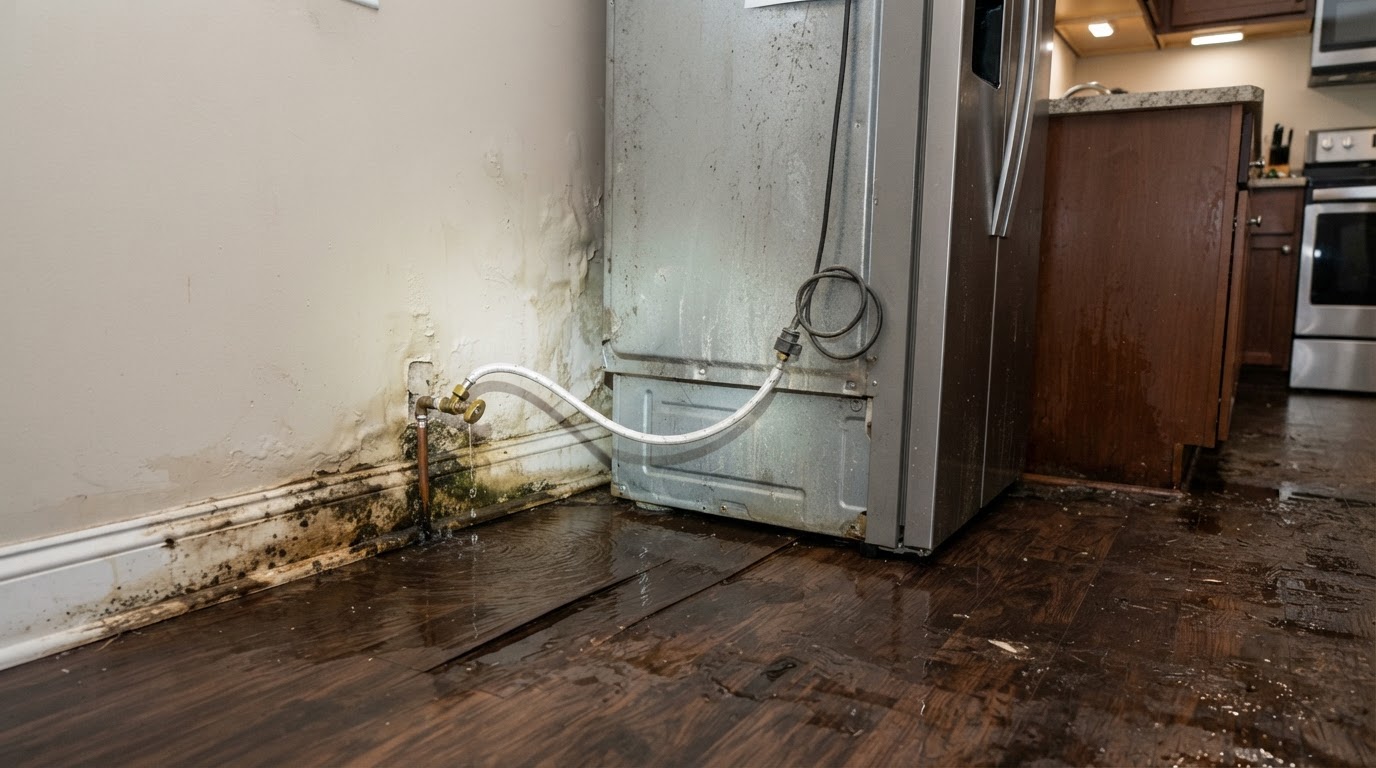
Refrigerators with ice makers and water dispensers rely on a small supply line—often a thin plastic or braided tube—that runs from the wall to the back of the appliance. That line and its connections are hidden behind a heavy refrigerator that is rarely moved. When a connection loosens, a tube cracks, or a fitting fails, water drips or flows continuously onto the floor behind the unit, where it spreads beneath the appliance and along the wall.
Because the leak is hidden, the first signs are often indirect. Flooring near the refrigerator may warp, cup, or develop darkened seams. A stain or dampness may appear at the edge of an adjacent cabinet. During cleaning or when the refrigerator is moved for service, standing water or a saturated floor may finally be discovered. By that point, moisture has often reached the subfloor and sometimes the wall behind the appliance.
The slow, continuous nature of these leaks makes them particularly damaging. Even a small drip, running over days or weeks, can introduce a large volume of water into the subfloor and cabinet framing. The water follows the lowest path—beneath the refrigerator, along the floor, and into flooring seams—so the visible wet area is often smaller than the actual affected area.
Supply Tubing Failure
Thin plastic or braided supply tubing can crack, split, or degrade over time, releasing water continuously behind the refrigerator.
Connection Leaks
A loose or improperly seated fitting at the wall or the appliance can allow water to drip or flow from the connection point.
Slow Hidden Leaks
Because the line is behind a large appliance, even a slow drip can persist for days or weeks, soaking the subfloor before it is noticed.
Water Spreading Beneath the Appliance
Water that escapes behind the refrigerator flows to the lowest point, traveling beneath the unit, along cabinet edges, and into flooring seams.
Our Refrigerator Leak Water Cleanup Process in Wilmington, NC
After a refrigerator or ice maker line leak, the cleanup process focuses on removing water and addressing moisture that has spread beneath the appliance and into the subfloor. The refrigerator's water supply should be shut off before or alongside cleanup; depending on the cause, supply line or appliance repair may require the appropriate qualified trade. Our work addresses the resulting water damage.
Evaluate the Water Loss
We assess the visible water, the flooring type, and whether moisture has migrated beneath the refrigerator, along cabinet edges, or into adjacent areas.
Confirm the Source Is Stopped
Water cleanup proceeds once the refrigerator supply is shut off or the line is repaired. Supply line repair is handled by the appropriate qualified trade.
Remove Standing Water
Extraction equipment removes visible water from the floor and any accessible areas beneath and around the appliance.
Inspect Moisture Migration
Moisture meters check beneath the refrigerator, along cabinet edges, across flooring, and into the subfloor to locate hidden water.
Establish Drying Conditions
Air movers and dehumidifiers are positioned to encourage controlled evaporation from wet flooring, cabinet edges, and subfloor materials.
Monitor Structural Materials
Moisture readings are tracked over time so the drying strategy can be adjusted as flooring and the subfloor release moisture.
Complete Final Moisture Evaluation
Equipment is removed once affected materials reach appropriate moisture levels based on comparison readings from unaffected areas.
Why Refrigerator Leaks Create Hidden Subfloor Moisture
Refrigerator leaks are uniquely hidden because the source sits behind a large, rarely-moved appliance. Water that escapes from the supply line flows beneath the refrigerator, where it pools against the wall and cabinet edges. From there it enters flooring seams and reaches the subfloor below. Because the refrigerator covers the wettest area, the damage beneath it can be extensive even when the visible floor around the unit looks normal.
The subfloor is the primary hidden concern. Water that passes through flooring seams soaks into the plywood or OSB beneath, and because that subfloor is sealed above by the finished floor, trapped moisture releases slowly. Cabinet framing and baseboards along the path of the water can also absorb moisture and hold it after the floor surface dries.
Moisture detection maps the true extent of the loss. Readings beneath the refrigerator (once moved), along cabinet edges, and across the subfloor show whether water has traveled beyond the visible area. Not every wet material can always be saved—some warped flooring or saturated cabinet materials may require removal based on their condition.
Refrigerator & Ice Maker Leak Cleanup FAQs for Wilmington Homes
Need Refrigerator or Ice Maker Line Leak Cleanup in Wilmington, NC?
If a refrigerator supply line leak has caused hidden water damage beneath your appliance or flooring, call to check current service availability. From moisture detection to subfloor drying, our Wilmington team can help.