Sink, Bathtub & Shower Overflow Cleanup in Wilmington, NC
Sink, bathtub, and shower overflow cleanup in Wilmington, NC addresses the water that spills across a bathroom or kitchen floor when a fixture overflows or a drain backs up. Overflow water can travel beyond the immediate room—into vanities, beneath tile, through floor assemblies, and even into the ceiling of the room below. Our team removes the standing water, traces how far moisture has migrated, and sets up controlled drying for affected materials.
What Causes Sink, Tub & Shower Overflow Damage in Wilmington Bathrooms?
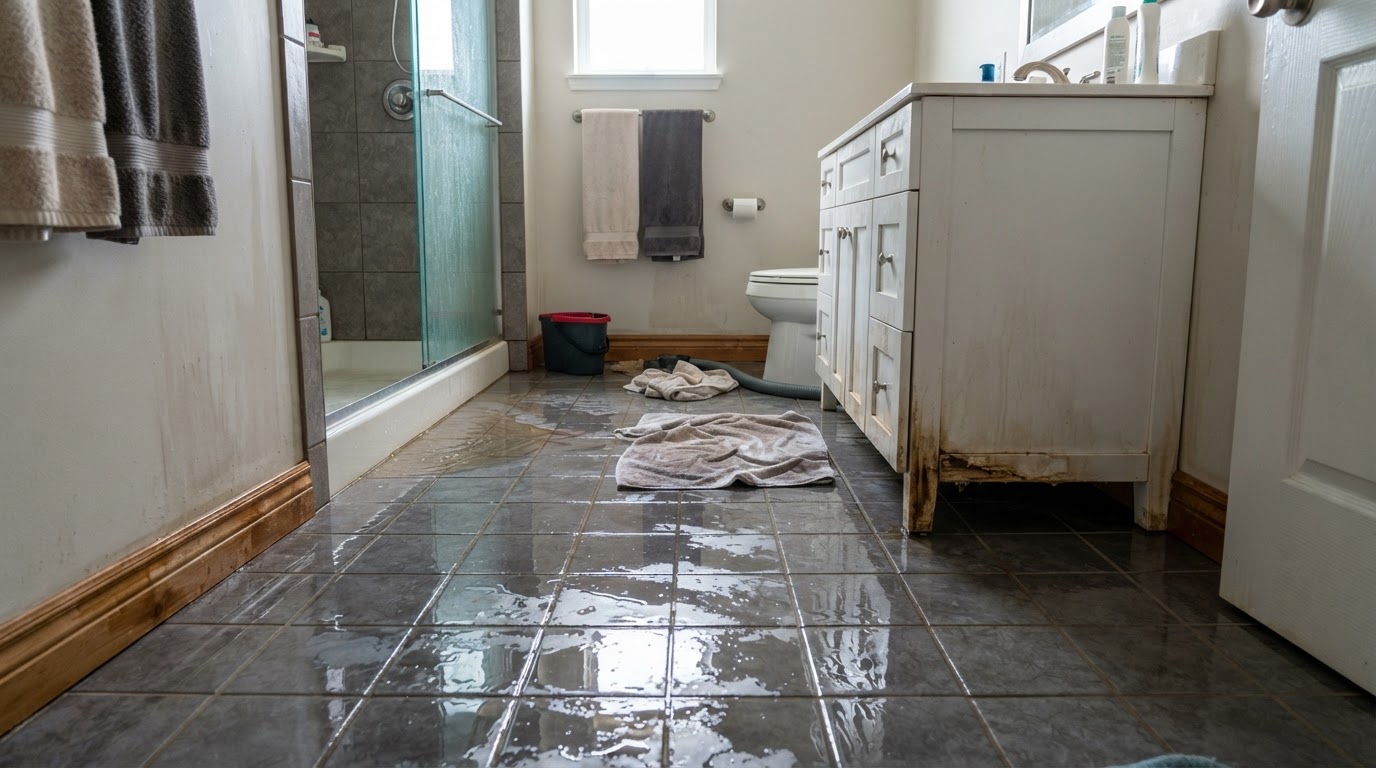
An overflow is one of the most common bathroom water-loss scenarios. A bathtub left running, a sink that drains slowly and overflows, or a shower pan that leaks can all send water across the bathroom floor. Because bathroom floors are typically finished with tile or vinyl over a subfloor, water travels through grout lines, beneath baseboards, and into the vanity cabinet before it is fully noticed.
Fixture leaks contribute as well. A slow leak at a sink supply line, a shower pan that has lost its seal, or a drain connection that has loosened can release water over time into the vanity, wall cavity, or subfloor. These slower losses may not produce visible standing water but can saturate materials behind and beneath the fixture.
When an overflow occurs on an upper floor, water can travel downward through the floor assembly and appear as a wet stain or drip on the ceiling of the room below. That means a bathroom overflow can create damage in two locations at once—the bathroom itself and the ceiling and wall beneath it. The contamination level of the water depends on its source; clean tap water from a fresh overflow is different from water that has sat or mixed with other sources.
Fixture Overflows
A bathtub left running, a slow-draining sink, or an overflowing shower can spill water across the bathroom floor and into surrounding materials.
Fixture & Supply Line Leaks
A leaking sink supply line, a failed shower pan seal, or a loose drain connection can release water into the vanity, wall cavity, or subfloor over time.
Drain-Related Water
A blocked or backed-up drain can cause a fixture to fill and overflow, sending water across the floor and into floor assemblies.
Downward Migration
Overflow water on an upper floor can travel through the floor assembly and damage the ceiling and wall of the room below.
Our Overflow Water Cleanup Process Near Wilmington, NC
After a sink, tub, or shower overflow, the cleanup process focuses on removing standing water and addressing moisture that has moved into vanities, beneath tile, and through floor assemblies. If a drain blockage or fixture failure caused the overflow, that source should be addressed by the appropriate qualified trade before or alongside cleanup. Our work addresses the resulting water damage.
Evaluate the Water Loss
We assess the visible water, the fixture involved, and whether moisture has migrated into the vanity, beneath tile, or through the floor assembly to the ceiling below.
Determine Water Category
The contamination level of the water is evaluated based on its source and how long it sat, which shapes cleaning and material-salvage decisions.
Remove Standing Water
Extraction equipment removes visible water from the bathroom floor and any accessible areas beneath vanities or fixtures.
Inspect Moisture Migration
Moisture meters check beneath tile, inside vanities, along baseboards, and—if applicable—the ceiling of the room below to locate hidden water.
Address Contamination Precautions
Where the water category warrants it, appropriate cleaning and sanitation precautions are applied to affected materials and surfaces.
Establish Drying Conditions
Air movers and dehumidifiers are positioned to encourage controlled evaporation from wet vanities, drywall, subfloor, and ceiling materials.
Monitor and Complete Final Evaluation
Moisture readings are tracked over time, and equipment is removed once affected materials reach appropriate moisture levels.
Where Overflow Water Travels in a Wilmington Bathroom
Bathroom overflow water follows predictable but hidden paths. On the floor, it moves through grout lines and beneath baseboards into the vanity cabinet and the wall cavity behind the fixture. Beneath the finished tile or vinyl, it reaches the subfloor, which can absorb and hold water even after the surface appears dry. Vanities, with their particleboard and MDF components, are particularly prone to absorbing water and swelling.
When the overflow occurs on an upper floor, water travels downward through the floor assembly. It can saturate the subfloor, the ceiling drywall below, and the wall plates where the floor and wall meet. A stain or soft spot on the ceiling beneath a bathroom is a common sign that overflow water has migrated through the assembly.
Moisture detection maps the full extent of the loss. Readings beneath tile, inside vanities, on the subfloor, and on the ceiling below show whether water has traveled beyond the visible area. Not every wet material can always be saved—swollen vanity panels or saturated ceiling drywall may require removal based on their condition and the water category.
Sink, Tub & Shower Overflow Cleanup FAQs for Wilmington Homes
Need Overflow Cleanup in Wilmington, NC?
If a sink, bathtub, or shower overflow has sent water across your bathroom or into the ceiling below, call to check current service availability. From water removal to subfloor and drywall drying, our Wilmington team can help.