Emergency Water Removal & Water Extraction in Wilmington, NC
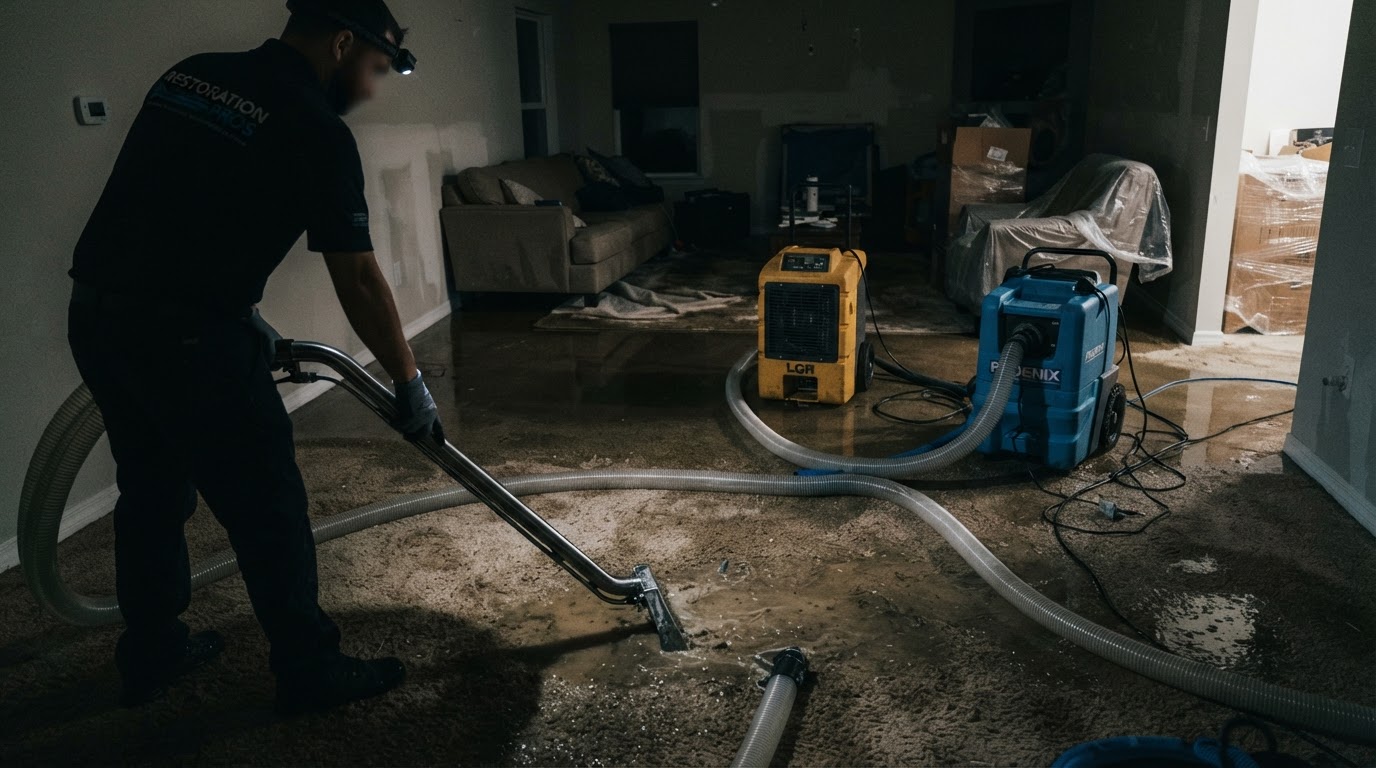
Emergency water removal in Wilmington, NC focuses on extracting standing water and beginning the drying process before moisture spreads farther into flooring, drywall, and other building materials. When a supply line fails, a fixture overflows, or storm water enters a property, bulk water removal is the first priority. Our team uses commercial extraction equipment, moisture detection, and controlled drying to address active water losses for Wilmington homes and businesses.
What Causes Emergency Water Damage in Wilmington Homes?
Standing water is more than a surface problem. When water pools on flooring, it immediately begins absorbing into porous materials beneath—carpet pad, subflooring, drywall, and baseboards all draw water inward through capillary action. The longer water sits, the farther it travels into adjacent rooms, wall cavities, and ceiling assemblies below. Extracting bulk water quickly removes the source of ongoing absorption and is fundamentally different from simply drying the visible floor surface.
A broken supply line under a sink or behind a toilet can release pressurized water continuously until the valve is shut, flooding multiple rooms within minutes. An overflowing bathtub or washing machine releases a large volume in a short window. A water heater tank failure dumps dozens of gallons at once. Storm water entering through a compromised opening brings exterior contamination along with it. Each scenario changes the volume, the water category, and how far moisture has already migrated by the time extraction begins.
If it is safe to do so and you know how, shutting off the main water supply or the fixture valve can stop an active plumbing leak from releasing more water. If water is near electrical outlets, panels, or appliances, avoid entering the affected area until it is safe. These steps limit further damage, but they do not remove the water that has already saturated building materials—that requires professional extraction equipment and a drying plan.
Broken Supply Lines
Pressurized supply lines under sinks, behind toilets, and to appliances can fail and release water continuously until the valve is shut, flooding multiple rooms quickly.
Overflowing Fixtures
Bathtubs, sinks, and toilets that overflow release a large volume of water in a short window, spreading across flooring and into adjacent rooms before discovery.
Appliance Failures
Water heaters, washing machines, and dishwashers can fail and release dozens of gallons, often in utility closets or laundry rooms where water travels into hidden cavities.
Storm Water Intrusion
Storm water entering through a compromised opening brings exterior water into the structure, which may carry contamination that changes how the loss is handled.
Our Water Extraction Process Near Wilmington, NC
Emergency water extraction follows a sequence that prioritizes bulk water removal first, then moves into moisture detection and a structured drying plan. Removing standing water is only the first step—the moisture that has already absorbed into materials requires detection, air movement, and dehumidification to address fully.
Initial Assessment
We assess the affected areas, identify the water source, confirm it has been stopped when possible, and evaluate safety concerns including electrical hazards and water category.
Bulk Water Extraction
Commercial extraction equipment removes standing water from flooring, carpet, and low areas. This is the fastest way to halt ongoing absorption into porous materials beneath.
Moisture Detection
Moisture meters and infrared imaging map how far water has migrated into drywall, subfloors, and wall cavities—often well beyond the visible wet area.
Drying Plan
Based on the moisture map, we position air movers and dehumidifiers to target the full affected footprint, drawing moisture out of saturated materials over the drying period.
Air Movement & Dehumidification
High-velocity air movers accelerate evaporation from wet surfaces while commercial dehumidifiers pull moisture out of the air, preventing it from reabsorbing into dry materials.
Monitoring
Daily moisture readings track drying progress against established drying goals, and equipment is adjusted as materials dry until target levels are reached.
Why Hidden Moisture Matters After Water Extraction in Wilmington
Extraction removes the bulk liquid water you can see, but it does not remove the moisture that has already absorbed into building materials. Water migrates farther than the visible wet spot—beneath baseboards into drywall, through grout lines into subflooring, and behind walls into insulation and framing. A floor that looks dry on the surface can still be saturated beneath, which is why moisture meters are used to verify conditions inside materials rather than relying on visual inspection alone.
Wilmington's humid coastal climate can make controlled drying and indoor humidity management especially relevant after a water loss. When evaporation from wet materials raises indoor humidity, that moisture can reabsorb into dry materials elsewhere in the structure if it is not removed by dehumidification. This is why air movers and dehumidifiers work together—air movement drives moisture out of materials, and dehumidification captures it from the air so it does not settle back in.
Not every wet material can always be saved. Some materials, once saturated, may require removal rather than drying. Moisture meters help determine which materials can be dried in place and which have absorbed enough water that removal is the appropriate path. For related losses, see our flood damage cleanup and burst pipe water damage cleanup services, or learn about structural drying specifically. For large-volume events, see water main break cleanup and sump pump failure cleanup. For business properties, see commercial water damage restoration.
Emergency Water Extraction FAQs for Wilmington Property Owners
Need Emergency Water Removal in Wilmington, NC?
If you are dealing with standing water, call to check current service availability. From bulk water extraction to moisture mapping and structural drying, our Wilmington team can help address the loss before moisture spreads farther.