Ceiling Water Damage & Wet Drywall Cleanup in Wilmington, NC
Ceiling water damage and wet drywall cleanup in Wilmington, NC addresses the damage that occurs when water enters a ceiling assembly from a roof leak, plumbing failure, HVAC overflow, or a leak from an upper floor. Water that reaches a ceiling can soak into drywall, insulation, and framing before any visible stain appears. Our team traces the source of the moisture, removes standing water where present, and sets up controlled drying for affected ceiling materials.
How Ceiling Water Damage Develops in Wilmington Homes
A ceiling is one of the last places water damage becomes visible. Water that enters from above—a roof leak, a plumbing line in the attic, an overflowing AC drain pan, or a bathroom leak on an upper floor—first saturates the insulation and framing in the ceiling cavity. Only after those materials have absorbed what they can hold does water reach the ceiling drywall below and produce a visible stain, sag, or drip.
Several sources can feed ceiling water damage. A roof leak allows rainwater into the attic and ceiling assembly. A plumbing line running through the attic or between floors can leak or fail. An AC condensate drain pan can overflow into the ceiling below. A bathroom overflow or fixture leak on an upper floor can travel through the floor assembly into the ceiling beneath. Each source sends water into the ceiling cavity from a different angle.
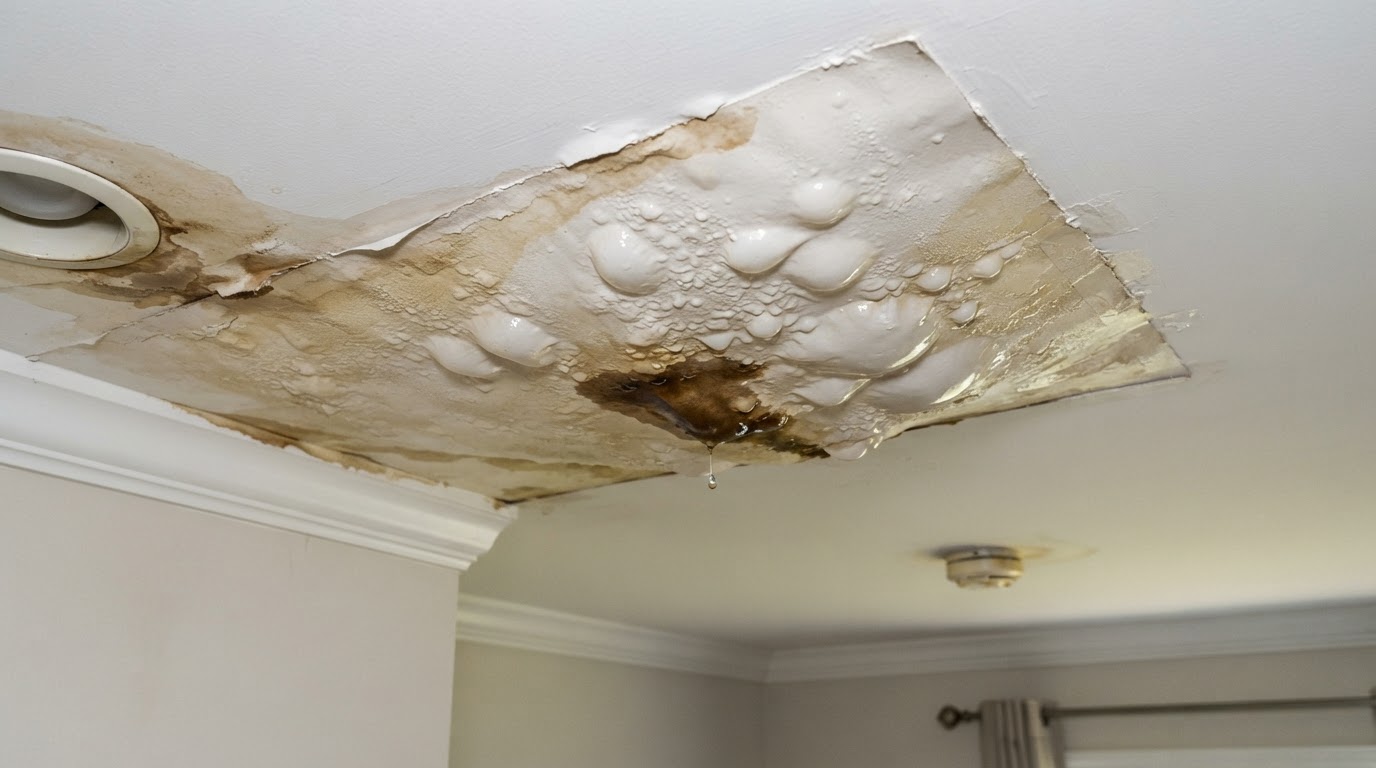
Common warning signs include a discolored or darkening stain, bubbling or peeling paint, a soft or sagging area of drywall, or an active drip. A musty odor in the room below can also indicate moisture trapped in the ceiling assembly. Because water can travel along framing members before reaching the drywall, the visible stain may be located away from the actual entry point.
Roof Leaks
Rainwater entering through a roof breach soaks into attic insulation and ceiling drywall, often appearing as a stain some distance from the entry point.
Plumbing Above the Ceiling
A leaking or failed plumbing line in the attic or between floors releases water into the ceiling cavity and drywall below.
HVAC Overflow
An overflowing AC condensate drain pan in the attic sends water into the ceiling drywall and insulation beneath the air handler.
Upper-Floor Bathroom Leaks
A bathroom overflow or fixture leak on an upper floor can travel through the floor assembly and damage the ceiling of the room below.
Our Wet Ceiling Cleanup Process Near Wilmington, NC
After ceiling water damage is discovered, the cleanup process focuses on identifying the moisture source, addressing wet drywall and insulation, and drying the ceiling assembly. The source of the water—whether a roof, plumbing, or HVAC issue—should be stopped or repaired before or alongside cleanup by the appropriate qualified trade. Our work addresses the resulting water damage.
Evaluate the Water Loss
We assess the visible damage, the likely source, and whether moisture has spread through the ceiling cavity beyond the visible stain.
Confirm the Source Is Addressed
Water cleanup proceeds once the source—a roof, plumbing, or HVAC issue—is stopped or repaired by the appropriate qualified trade.
Remove Standing Water Where Present
Any pooled water in the ceiling cavity or active drips are addressed before drying of the ceiling materials begins.
Inspect Moisture Migration
Moisture meters map the ceiling drywall, insulation, and framing to locate hidden water that has spread beyond the visible stain.
Establish Drying Conditions
Air movers and dehumidifiers are positioned to encourage controlled evaporation from wet ceiling drywall, insulation, and framing.
Monitor Structural Materials
Moisture readings are tracked over time so the drying strategy can be adjusted as ceiling materials release moisture.
Complete Final Moisture Evaluation
Equipment is removed once affected materials reach appropriate moisture levels based on comparison readings from unaffected areas.
Why Ceiling Assemblies Hold Hidden Moisture
Ceiling assemblies are particularly good at hiding water. Above the ceiling drywall sit insulation and framing members, both of which can absorb and hold significant moisture. Water that enters the cavity from above often saturates the insulation first, then travels along framing members before reaching the drywall. Because the drywall is the lowest point, a visible stain may appear far from where the water actually entered.
Ceiling drywall itself absorbs water slowly and can hold a large volume before showing signs. Bubbling paint, a soft spot, or sagging are indicators that the drywall has taken on substantial moisture. Insulation that has been saturated may compress and lose effectiveness, and in some cases cannot be effectively dried and requires removal.
Moisture detection maps the full extent of the loss. Readings across the ceiling drywall, into the cavity above, and along framing show whether water has traveled beyond the visible stain. Not every wet material can always be saved—saturated ceiling drywall or compressed insulation may require removal based on their condition.
Ceiling Water Damage FAQs for Wilmington Homeowners
Need Ceiling Water Damage Cleanup in Wilmington, NC?
If a wet ceiling, water stain, or sagging drywall has appeared, call to check current service availability. From moisture detection to wet drywall and insulation drying, our Wilmington team can help.