Storm & Hurricane Water Damage Restoration in Wilmington, NC
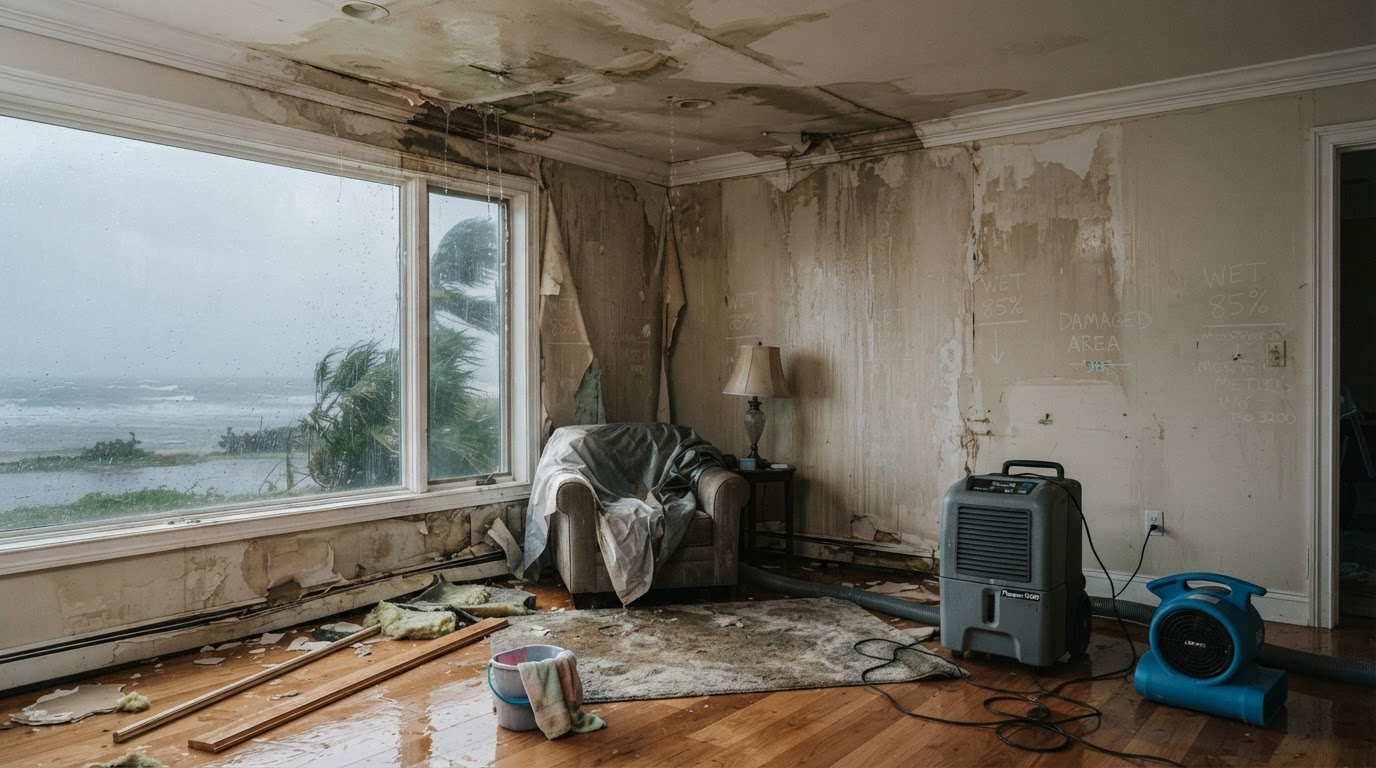
Storm water damage restoration in Wilmington, NC addresses water that enters a property during coastal storms, hurricanes, and wind-driven rain. Storm conditions can drive water through roof damage, exterior openings, windows, and doors into ceiling and wall cavities. Our team identifies interior affected areas, removes standing water, inspects ceilings, walls, and floors, and begins controlled drying for Wilmington properties after the area is safe to access.
Storm-Related Water Intrusion in Wilmington and Coastal Properties
Wilmington's coastal location means tropical weather and hurricanes are a real part of the climate. During a storm, wind-driven rain can force water through openings that would normally shed water—around windows and doors, through compromised exterior openings, and through roof damage into attic and ceiling assemblies. Heavy rainfall adds volume, and the combination can introduce water into multiple parts of a structure at once. Personal safety takes priority during severe weather; water-damage service begins from the assumption that the area is safe to access.
Storm water intrusion often affects ceiling and wall cavities rather than just flooring. Water that enters through roof damage travels into attic insulation and ceiling drywall, appearing as stains or soft spots in the ceiling below—sometimes far from where the water actually entered. Water driven through exterior openings can travel down inside wall cavities, appearing on interior walls in rooms adjacent to the entry point. This hidden travel through assemblies is what makes storm water damage different from a localized plumbing leak.
It is important to distinguish interior water mitigation from exterior repairs. Roof repair, window replacement, and exterior opening repairs are separate trades; our focus is the interior water damage the storm has caused. Do not climb onto roofs or enter unsafe structures during or immediately after severe weather. Once conditions are safe and the area is accessible, interior water extraction, inspection, and drying can begin.
Wind-Driven Rain
Wind-driven rain can force water through openings that normally shed water, including around windows and doors and through compromised exterior seals.
Roof Damage
Storm damage to roofing allows water to enter attic and ceiling assemblies, where it travels through insulation and drywall before appearing inside.
Exterior Openings
Compromised exterior openings, windows, and doors can allow storm water to enter and travel down inside wall cavities to interior surfaces.
Heavy Rainfall
Heavy rainfall adds volume to storm water intrusion, overwhelming drainage and increasing the amount of water that enters the structure.
Our Storm Water Damage Restoration Process Near Wilmington, NC
Once the area is safe to access, storm water damage restoration follows a sequence that identifies interior affected areas, removes standing water, inspects ceilings, walls, and floors, and dries affected assemblies. Because storm water travels through hidden cavities, inspection drives the process.
Identify Interior Affected Areas
We map every interior area affected by storm water, including ceilings, walls, and floors, since storm intrusion often affects assemblies beyond the visible water.
Remove Standing Water
Extraction equipment removes standing water from flooring and low areas, halting ongoing absorption into subflooring, drywall, and wall cavities.
Inspect Ceilings, Walls & Floors
We inspect ceiling drywall, wall cavities, and floor assemblies for moisture that has traveled from the entry point through hidden building assemblies.
Moisture Mapping
Moisture meters and infrared imaging map the full moisture footprint inside ceilings, walls, and insulation, locating hidden water beyond visible stains.
Drying & Dehumidification
Air movers and dehumidifiers draw moisture out of saturated ceiling drywall, insulation, wall cavities, and framing throughout the drying period.
Monitor Moisture
Daily moisture readings track drying progress inside assemblies until materials reach target levels, confirming the structure is dry inside and out.
Why Storm Water Hides in Wilmington Ceilings and Walls
Storm water damage is deceptive because the entry point and the visible damage are often in different places. Water that enters through roof damage travels through attic insulation and along framing before appearing as a ceiling stain in the room below. Water driven through an exterior opening can travel down inside a wall cavity and appear on an interior wall far from where it entered. This hidden travel through assemblies is why moisture mapping matters more than visual inspection alone.
Ceiling assemblies are particularly vulnerable after storm intrusion. Insulation in the attic holds water against the ceiling drywall below, keeping it saturated long after the storm passes. Ceiling drywall absorbs water from above and can sag or weaken before any visible drip appears inside the living space. Wall cavities that have taken on storm water hold moisture against framing and insulation, and that moisture is not reached by surface drying. Wilmington's humid coastal climate can make controlled drying and indoor humidity management especially relevant after a storm water loss.
Exterior repairs—roof, windows, doors—are handled by the appropriate trades; our role is the interior water damage. For related losses, see our flood damage cleanup and emergency water extraction services. Where the focus is ceiling and wall moisture, hidden water damage cleanup applies, and structural drying covers the drying methodology.
Storm & Hurricane Water Damage FAQs for Wilmington Property Owners
Need Storm Water Damage Help in Wilmington, NC?
If storm or hurricane conditions have caused water intrusion, call to check current service availability once the area is safe. From interior affected-area mapping to cavity drying, our Wilmington team can help.