Roof Leak, Ceiling & Hidden Water Damage Cleanup in Wilmington, NC
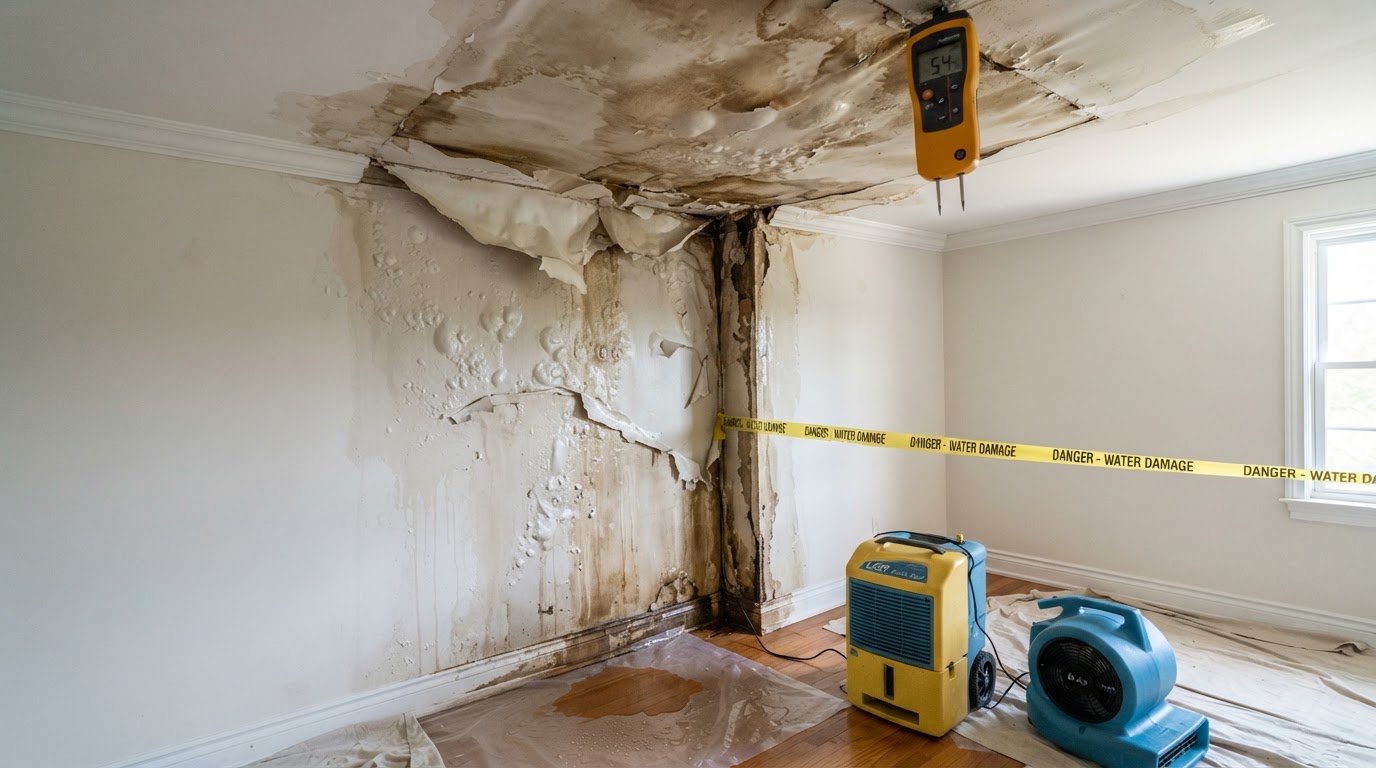
Roof leak water damage cleanup in Wilmington, NC addresses water that enters through roof penetrations and travels into ceiling systems, wall cavities, and insulation. A roof leak can saturate ceiling drywall and insulation above a room, create stains and bubbling paint, and travel down wall cavities before it is visible inside. Our team traces visible moisture impact, inspects ceiling and wall areas, removes standing water where present, and begins controlled drying for Wilmington properties.
How Roof Leaks Create Hidden Water Damage in Wilmington Homes
A roof leak rarely shows itself immediately. Water that enters through a compromised roof penetration—flashing, a vent, a skylight, or damaged shingles—often travels along framing members and through insulation before it appears as a stain on the ceiling below. By the time a ceiling stain is visible, the drywall and insulation above it may already be saturated. The visible stain is a late sign of moisture that has been traveling through the structure.
The signs of hidden water damage from a roof leak include ceiling stains, bubbling or peeling paint, soft or sagging drywall, and musty odors that can indicate moisture is present. Water can travel down wall cavities from a roof leak, appearing as a stain on a wall far from where the water actually entered. A ceiling stain sometimes appears away from the leak because water follows framing and gravity along unexpected paths inside the assembly.
A stain does not necessarily mean mold is present, and not every ceiling stain indicates an active leak—some are remnants of a past issue. Moisture meters and infrared imaging determine whether a stain represents active moisture or dried residue. Roof repair itself is a separate trade; our focus is the interior water damage the leak has caused. Do not cut into ceilings or walls yourself to investigate, as hidden hazards may exist inside assemblies.
Roof Penetration Leaks
Compromised flashing, vents, skylights, and shingles allow water to enter the attic and travel through insulation into ceiling drywall below.
Storm-Driven Water
Wind-driven rain from coastal storms can force water through roof openings and into ceiling and wall assemblies, often without visible exterior damage.
Ceiling Assembly Saturation
Water that enters through the roof saturates insulation and ceiling drywall, which can sag, stain, or weaken before any drip appears inside.
Wall Cavity Travel
Water from a roof leak can travel down wall cavities along framing, appearing as stains or moisture on walls far from the actual entry point.
Our Hidden Water Damage Cleanup Process Near Wilmington, NC
Hidden water damage cleanup follows a sequence that traces visible moisture impact, inspects ceiling and wall areas, removes standing water where present, and dries affected cavities and materials. Because roof leak water travels through hidden assemblies, detection drives the entire process.
Trace Visible Moisture Impact
We document every visible sign—ceiling stains, bubbling paint, soft drywall, wall discoloration—and trace each back toward its likely moisture source.
Inspect Ceiling, Wall & Floor Areas
We inspect ceiling drywall, wall cavities, insulation, and floor assemblies for moisture that has traveled from the roof leak through building materials.
Remove Standing Water Where Present
Where standing water has collected—such as in light fixtures, ceiling cavities, or on flooring—extraction equipment removes it safely.
Moisture Mapping
Infrared imaging and moisture meters map the full moisture perimeter inside ceilings, walls, and insulation, locating hidden moisture beyond visible stains.
Dry Cavities & Materials Where Feasible
Air movers and dehumidifiers are directed at affected ceiling and wall assemblies, with access created where needed to allow cavities to dry properly.
Monitor Moisture Conditions
Daily moisture readings track drying progress inside cavities and materials until they reach acceptable levels verified against dry baselines.
Why Water From a Roof Leak Hides in Wilmington Ceilings and Walls
The defining feature of roof leak water damage is that the visible sign and the actual moisture are rarely in the same place. Water enters through a roof penetration, saturates insulation in the attic, travels along framing members, and appears as a ceiling stain in the room below—often offset from where it entered. Inside wall cavities, water follows gravity and framing down, appearing on walls far from the ceiling stain. This is why tracing and mapping matter more than visible inspection alone.
Insulation is a major factor. Wet insulation holds moisture against ceiling drywall and framing, keeping those materials saturated long after the roof leak is repaired. Ceiling drywall absorbs water from above, weakening and sagging before any visible drip appears inside. Without moisture meters checking inside these assemblies, the hidden moisture above a ceiling stain can be missed entirely, leaving materials wet even after the visible stain is addressed.
Roof repair is handled by a qualified roofing contractor; our role begins once water has entered the structure. Hidden water damage cleanup often overlaps with storm and hurricane water damage restoration when weather is the cause, and with structural drying for the drying phase. When plumbing is the source of hidden moisture, burst pipe and plumbing leak cleanup may apply. For specific scenarios, see our pages on roof leak water damage, ceiling water damage and wet drywall, wall water damage and hidden moisture, and attic water damage and wet insulation. See our water damage restoration homepage for the full scope.
Roof Leak & Hidden Water Damage Cleanup FAQs for Wilmington Property Owners
Need Roof Leak or Hidden Water Damage Cleanup in Wilmington?
If a roof leak has caused ceiling stains, wall moisture, or hidden water damage, call to check current service availability. From moisture tracing to cavity drying, our Wilmington team can help.