Wall Water Damage & Hidden Moisture Cleanup in Wilmington, NC
Wall water damage and hidden moisture cleanup in Wilmington, NC addresses the water that enters wall cavities from pipe leaks, roof migration, bathroom plumbing, supply line failures, or exterior intrusion. Because walls are sealed on both sides, water can travel down inside the cavity, soak insulation and base plates, and saturate drywall long before any visible stain appears. Our team uses moisture detection to locate the hidden water, removes affected materials where needed, and sets up controlled drying for the wall assembly.
Signs Water May Be Trapped Behind a Wall in Wilmington Homes
Walls hide water damage well. A wall cavity contains drywall on both sides, insulation, wood framing, and base plates at the floor—all materials that absorb and hold moisture. When water enters that cavity from a pipe leak, roof migration, bathroom plumbing, a supply line failure, or exterior intrusion, it travels downward through the cavity, soaking materials along the way. Because the drywall faces are sealed and painted, water can spread inside the wall for an extended period before any visible sign appears.
Several sources feed wall water damage. A plumbing pipe inside the wall can leak or fail. Roof water can migrate down into wall cavities along framing. Bathroom plumbing—supply lines, shower valves, drain connections—can leak into the wall behind the fixture. HVAC condensate or exterior intrusion around windows can introduce moisture as well. Each source sends water into the cavity from a different entry point.
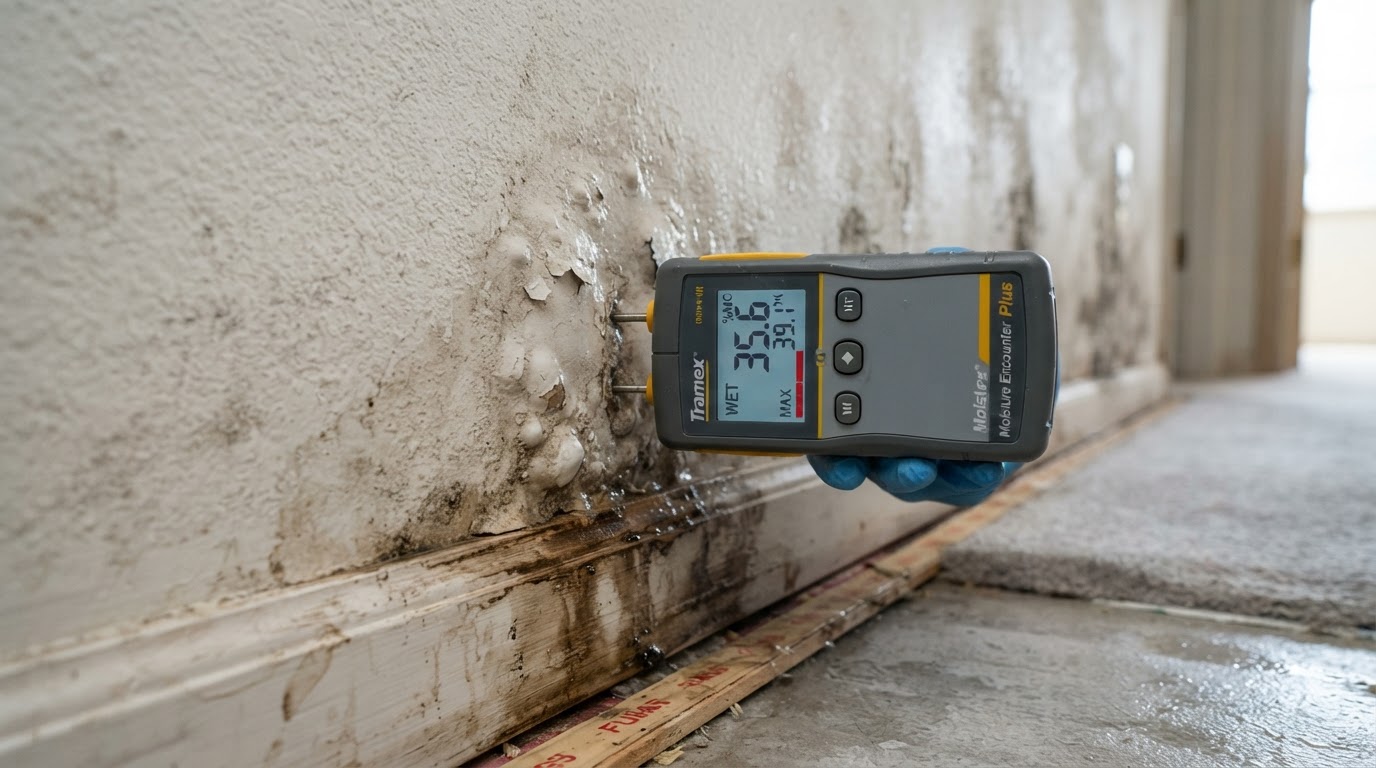
Warning signs tend to be indirect. Baseboards may soften, swell, or pull away from the wall. Paint may bubble, peel, or discolor. A damp or musty odor may develop in the room. The wall may feel unexpectedly warm or cold in one area. In some cases, drywall can be wet without any visible staining at all, which is why moisture meters are essential for locating the true extent of the loss.
Pipe Leaks Inside Walls
A plumbing pipe running through a wall cavity can leak or fail, releasing water into the insulation, base plates, and drywall.
Roof Water Migration
Water from a roof leak can travel down along framing members and enter wall cavities, appearing as damage far from the roof entry point.
Bathroom Plumbing Leaks
Supply lines, shower valves, and drain connections behind bathroom fixtures can leak into the wall cavity and saturate surrounding materials.
Supply Line & Exterior Intrusion
A failed fixture supply line or water entering around windows and exterior openings can introduce moisture into wall cavities.
Our Hidden Wall Moisture Cleanup Process in Wilmington, NC
After wall water damage is suspected or discovered, the cleanup process focuses on locating the hidden moisture, addressing wet materials, and drying the wall assembly. The source of the water—whether a plumbing, roof, or exterior issue—should be stopped or repaired before or alongside cleanup by the appropriate qualified trade. Our work addresses the resulting water damage.
Evaluate the Water Loss
We assess the visible signs, the likely source, and whether moisture has spread through the wall cavity beyond the visible area.
Confirm the Source Is Addressed
Water cleanup proceeds once the source—a plumbing, roof, or exterior issue—is stopped or repaired by the appropriate qualified trade.
Locate Hidden Moisture
Moisture meters and inspection map the drywall, insulation, base plates, and framing to find water trapped inside the wall cavity.
Address Affected Materials
Where materials cannot be effectively dried—such as saturated insulation or swollen drywall—removal may be necessary to allow drying of the cavity.
Establish Drying Conditions
Air movers and dehumidifiers are positioned to encourage controlled evaporation from wet drywall, framing, and the wall cavity.
Monitor Structural Materials
Moisture readings are tracked over time so the drying strategy can be adjusted as wall materials release moisture.
Complete Final Moisture Evaluation
Equipment is removed once affected materials reach appropriate moisture levels based on comparison readings from unaffected walls.
How Water Moves Through Wall Cavities in Wilmington Properties
Water inside a wall cavity follows gravity. Once it enters—whether from a pipe, roof, or fixture—it travels downward through the cavity, soaking insulation, base plates, and the lower sections of drywall. Because the cavity is sealed on both sides by drywall, that moisture has nowhere to evaporate naturally. It can linger in the base plate and lower drywall for an extended period, even when the wall surface appears completely dry.
Drywall is particularly absorbent. It wicks water upward through capillary action, so a wet base plate can saturate the bottom foot or more of a drywall panel. Insulation inside the cavity can hold water against the framing, keeping studs wet long after the visible surfaces dry. Baseboards, typically wood or MDF, absorb water from the base plate and swell or pull away from the wall.
Moisture detection maps the full extent of the loss. Readings across the drywall surface, at the base plate, and inside the cavity (where accessible) show whether water has traveled beyond the visible signs. Not every wet material can always be saved—saturated insulation or swollen, crumbling drywall may require removal to allow the cavity to dry.
Wall Water Damage & Hidden Moisture FAQs for Wilmington Homes
Need Help With Water Behind a Wall in Wilmington?
If you suspect hidden moisture inside a wall, call to check current service availability. From moisture meter inspection to wet drywall and cavity drying, our Wilmington team can help.