Burst Pipe & Plumbing Leak Cleanup in Wilmington, NC
Burst pipe cleanup in Wilmington, NC addresses water damage from failed pipe joints, broken supply lines, corroded plumbing, and high-volume pipe failures. A pressurized plumbing break can release water rapidly, spreading through floors, ceilings, and wall cavities before the source is stopped. Our team locates affected zones, extracts water, inspects wall and floor cavities for hidden moisture, and begins controlled drying for Wilmington properties.
Common Causes of Burst Pipe Water Damage Near Wilmington, NC
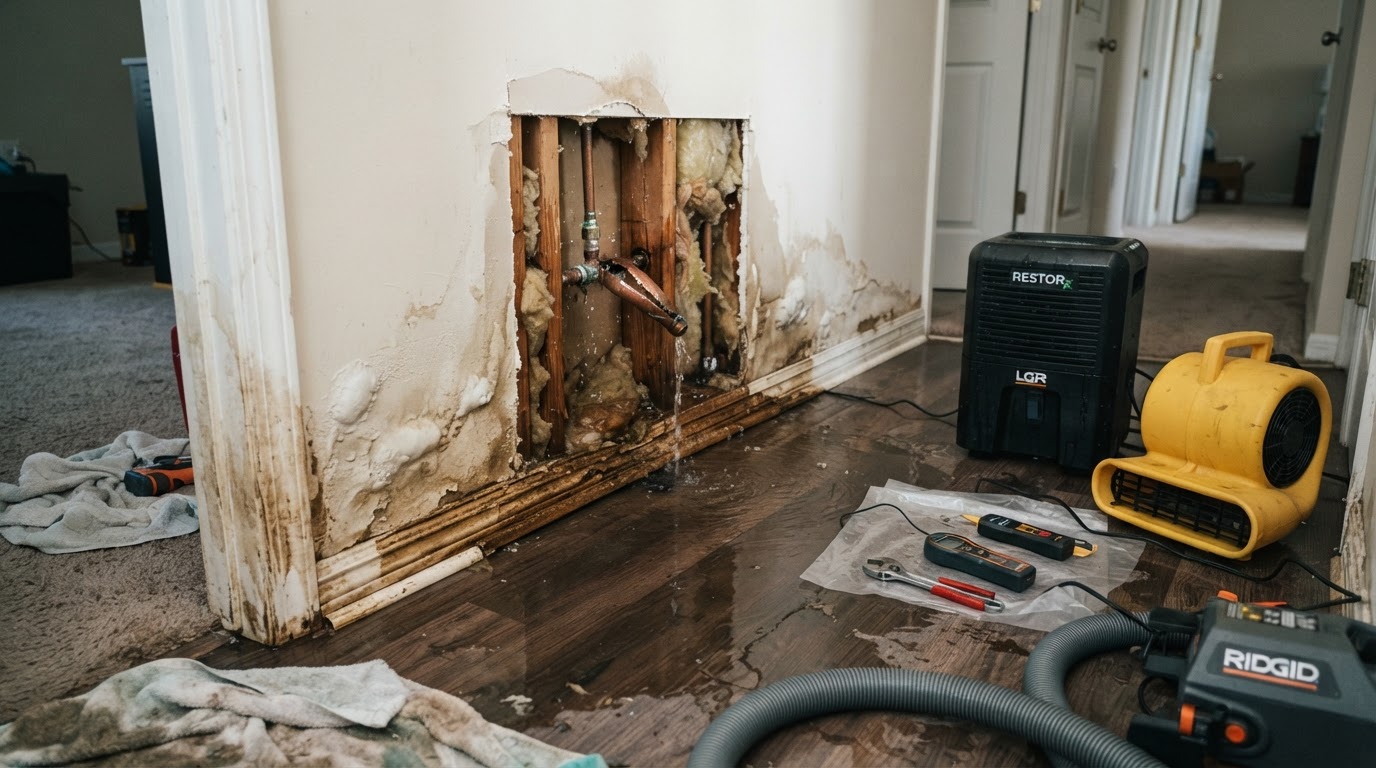
Plumbing failures release pressurized water, which means the volume and spread can be significant even in a short time. A failed pipe joint, a broken supply line to a fixture or appliance, or a corroded section of plumbing can all release water continuously until the supply is shut off. The water follows gravity and the path of least resistance, spreading across flooring, into subflooring, behind baseboards, and through wall and ceiling cavities—often well beyond the visible wet area.
Hidden plumbing leaks present a different challenge. A slow leak inside a wall cavity or beneath a floor can saturate materials over time before any visible sign appears. By the time a stain, a damp spot, or a musty odor surfaces, the drywall, insulation, and framing behind may already be saturated. These slow leaks are harder to locate because the source is concealed, and the visible damage may be offset from where the water actually entered the assembly.
If it is safe to do so and you know how, shutting off the main water supply stops an active plumbing leak from releasing more water. This limits further damage but does not remove the water that has already migrated into building materials. High-volume pipe failures can affect multiple rooms, ceilings below upper-floor leaks, and wall cavities along the path the water traveled—all of which require inspection and drying.
Failed Pipe Joints
Joints in supply and drain lines can fail from age, pressure, or installation issues, releasing water at the connection point that spreads into surrounding materials.
Broken Supply Lines
Supply lines to fixtures and appliances can burst or separate, releasing pressurized water continuously until the valve is shut, often flooding multiple rooms quickly.
Corroded Plumbing
Corrosion over time can weaken metal plumbing until a section fails, releasing water that may have been building pressure behind the compromised area.
Hidden Plumbing Leaks
Slow leaks inside wall cavities or beneath floors saturate materials over time before visible signs appear, with damage often offset from the actual source.
Our Burst Pipe Cleanup Process in Wilmington, NC
After the water source is stopped, burst pipe cleanup follows a sequence that locates affected zones, extracts water, inspects wall and floor cavities for hidden moisture, and dries affected materials. Because pressurized water travels through hidden assemblies, cavity inspection is central to the process.
Locate Affected Zones
We identify every room and assembly the water has reached, including areas beyond the visible wet spot, since pressurized water travels through floors, ceilings, and wall cavities.
Extract Water
Extraction equipment removes standing water from flooring and low areas, halting ongoing absorption into subflooring, drywall, and the cavities behind baseboards.
Inspect Wall & Floor Cavities
We inspect inside wall cavities and beneath flooring for moisture that has migrated beyond the surface, since hidden water in these assemblies is not reached by extraction.
Moisture Mapping
Moisture meters and infrared imaging map the full moisture footprint inside materials, locating saturation that visual inspection alone cannot detect.
Drying Equipment
Air movers and dehumidifiers are positioned to target the full affected footprint, drawing moisture out of saturated drywall, subflooring, and framing.
Monitoring
Daily moisture readings track drying progress inside materials until readings reach target levels, confirming the structure is dry rather than just the surface.
Why Water From a Broken Pipe Hides in Wilmington Walls and Floors
Water from a pressurized plumbing break travels farther than the visible wet area because it follows the paths of least resistance inside building assemblies. Behind baseboards, water enters wall cavities and saturates the drywall and insulation inside. Beneath flooring, it soaks into subflooring and the framing below. A ceiling below an upper-floor leak can saturate from above, with water pooling inside the ceiling assembly before any visible drip appears. These hidden pathways are why cavity inspection matters.
Drywall is particularly absorbent. It wicks water upward and sideways through capillary action, which means a leak at floor level can saturate drywall well above the visible water line. Insulation inside wall cavities holds that moisture against the framing, keeping structural members wet long after the surface dries. Hardwood flooring can cup or warp as it absorbs moisture from below, and subflooring beneath it may remain saturated even after the floor surface appears dry.
Not every wet material can always be saved, and some materials that have absorbed water for an extended period may require removal rather than drying. Moisture meters guide those decisions by measuring actual conditions inside materials. For related losses, see our emergency water extraction and structural drying services. Where water migrated through ceiling and wall assemblies, hidden water damage cleanup applies. Specific scenarios like supply line breaks, frozen pipe bursts, slab leak water damage, and water main breaks each have their own pages. For business properties, see commercial water damage restoration.
Burst Pipe Water Damage Cleanup FAQs for Wilmington Property Owners
Need Burst Pipe Water Cleanup Near Wilmington?
If a pipe has burst or a supply line has failed, call to check current service availability. From affected-zone mapping to cavity inspection and structural drying, our Wilmington team can help address the loss.