Supply Line Break & Water Line Leak Cleanup in Wilmington, NC
Supply line break and water line leak cleanup in Wilmington, NC addresses the water damage that occurs when a fixture or appliance supply line fails and releases pressurized water into a home. Supply line failures can release a large volume of water quickly, sending it across flooring, into cabinetry, and beneath baseboards before the supply is shut off. Our team removes the standing water, traces how far moisture has migrated, and sets up controlled drying for affected materials.
Where Water Travels After a Supply Line Break in Wilmington Homes
Supply lines connect fixtures and appliances to the home's water system—toilets, sinks, refrigerators, washing machines, and dishwashers all rely on them. These lines and their fittings can fail suddenly. A braided supply hose can burst, a connection can loosen, or a fixture connector can crack. Because the lines are under pressure, a failure can release a large volume of water in a short period, often before anyone notices.
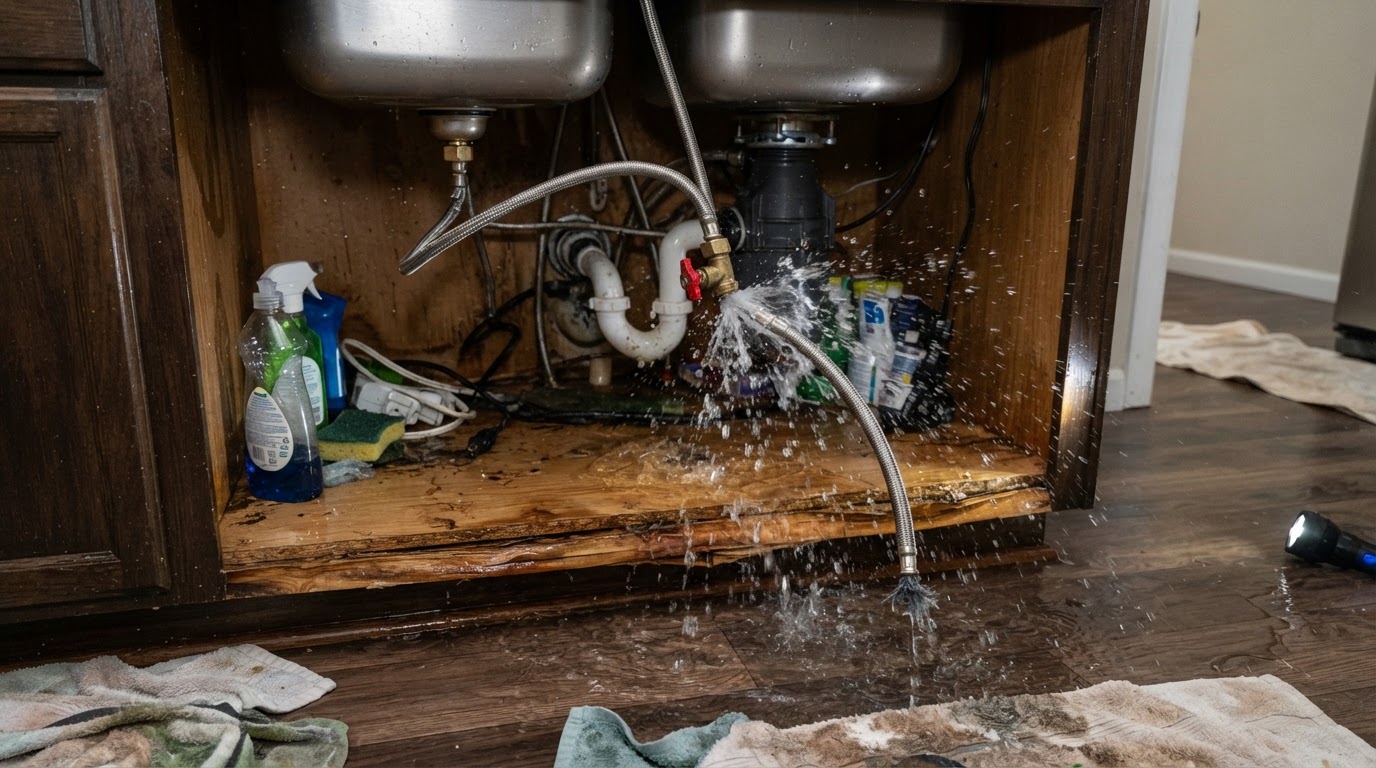
The water from a supply line break spreads quickly across flooring and into every available low point. It flows beneath cabinets and appliances, through doorways into adjacent rooms, and along baseboards into wall cavities. Because the water is pressurized, it can travel farther than a slow leak—reaching areas well beyond the immediate fixture before the supply is shut off.
Several types of supply lines commonly cause indoor water damage. Toilet supply lines, often hidden behind the fixture, can fail and flood a bathroom and adjacent rooms. Sink supply lines beneath vanities can leak into the cabinet and subfloor. Appliance hoses—refrigerator ice maker lines, washing machine hoses, dishwasher connections—can burst or loosen and release water behind or beneath the appliance. Each source sends water into a different set of materials.
Toilet Supply Line Failures
A burst or loosened toilet supply line, hidden behind the fixture, can release pressurized water across the bathroom and into adjacent rooms.
Sink Supply Line Leaks
A failed connection or cracked line beneath a vanity leaks water into the cabinet, baseboards, and subfloor below the sink.
Appliance Hose Bursts
Refrigerator, washing machine, and dishwasher supply hoses can burst or loosen, releasing water behind or beneath the appliance.
Fixture Connector Failures
A cracked or degraded fixture connector can fail suddenly, sending pressurized water across flooring and into surrounding materials.
Our Supply Line Leak Water Cleanup Process in Wilmington, NC
After a supply line break, the cleanup process focuses on removing the standing water and addressing moisture that has migrated beneath flooring, into cabinets, and along baseboards. The water supply should be shut off before or alongside cleanup; depending on the cause, supply line or plumbing repair may require the appropriate qualified trade. Our work addresses the resulting water damage.
Evaluate the Water Loss
We assess the visible water, the fixture or appliance involved, and how far water has traveled across flooring and into adjacent materials.
Confirm the Source Is Stopped
Water cleanup proceeds once the supply is shut off or the line is repaired. Supply line repair is handled by the appropriate qualified trade.
Remove Standing Water
Extraction equipment removes visible water from flooring, beneath cabinets and appliances, and any adjacent rooms the water reached.
Inspect Moisture Migration
Moisture meters check beneath flooring, inside cabinets, along baseboards, and into wall cavities to locate hidden water.
Establish Drying Conditions
Air movers and dehumidifiers are positioned to encourage controlled evaporation from wet flooring, cabinets, subfloor, and wall materials.
Monitor Structural Materials
Moisture readings are tracked over time so the drying strategy can be adjusted as materials release moisture.
Complete Final Moisture Evaluation
Equipment is removed once affected materials reach appropriate moisture levels based on comparison readings from unaffected areas.
Why Supply Line Breaks Saturate Hidden Materials
Supply line breaks are particularly damaging because the water is pressurized and spreads quickly. Before the supply is shut off, water can travel across an entire room, through doorways, and beneath cabinets and appliances. It reaches the subfloor through flooring seams, enters wall cavities along baseboards, and soaks into cabinet bases and toe kickss. The visible water is often only a fraction of what has migrated into hidden materials.
Flooring and the subfloor beneath are primary concerns. Water that passes through flooring seams soaks into the plywood or OSB subfloor, which is sealed above by the finished floor and releases moisture slowly. Cabinet bases—especially particleboard and MDF components—absorb water rapidly and swell. Baseboards and the lower sections of drywall wick water upward through capillary action.
Moisture detection maps the full extent of the loss. Readings beneath flooring, inside cabinets, along baseboards, and into wall cavities show whether water has traveled beyond the visible area. Not every wet material can always be saved—swollen cabinet bases, warped flooring, or saturated drywall may require removal based on their condition.
Supply Line Leak Cleanup FAQs for Wilmington Homeowners
Need Supply Line Leak Cleanup in Wilmington, NC?
If a supply line break has released water across your flooring or into your cabinets, call to check current service availability. From water extraction to subfloor and cabinet drying, our Wilmington team can help.