Slab Leak Water Damage Cleanup in Wilmington, NC
Slab leak water damage cleanup in Wilmington, NC addresses the moisture that can affect flooring, baseboards, drywall, and the subfloor when a plumbing line beneath or within a concrete slab develops a leak. Because the source is hidden below the floor, water can migrate upward into finished materials before the cause is identified. Our team focuses on the resulting water damage—removing standing water, tracing how far moisture has migrated, and setting up controlled drying for affected materials.
How Slab Leak Water Damage Affects Wilmington Homes
Some homes in the Wilmington area are built on concrete slab foundations, with plumbing lines running beneath or within the slab. When one of those lines develops a leak, water escapes into the slab and the materials above it. Because the source is hidden below the finished floor, the leak is not visible directly. Instead, the damage appears as moisture in the flooring, baseboards, drywall, and subfloor above the slab.
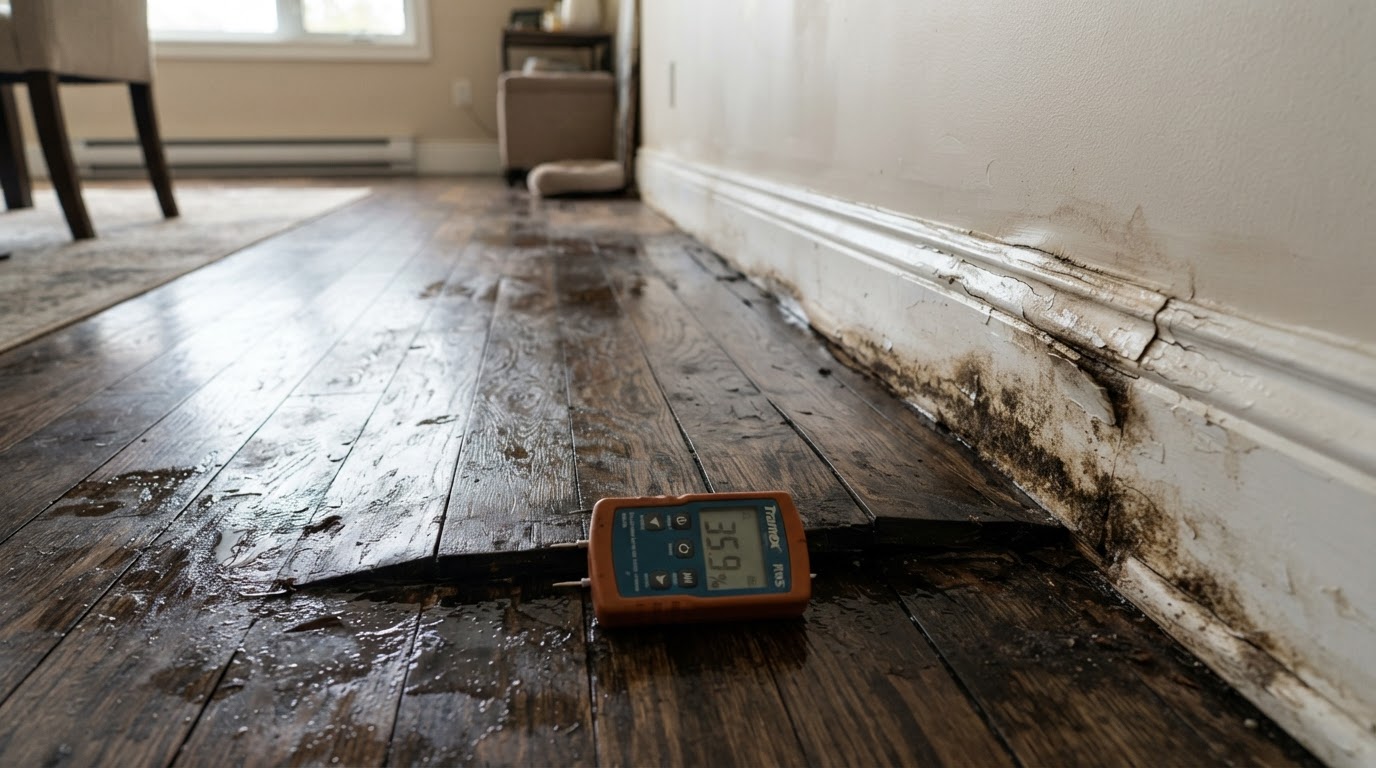
The signs of slab leak water damage are often indirect. Flooring may develop damp or warm spots, or discolor in certain areas. Baseboards may swell or pull away from the wall. Drywall at the base of walls may soften. In some cases, unexplained moisture appears with no visible plumbing source above the slab. These signs indicate that water from below has migrated into the finished materials, even though the leak itself is hidden.
It is important to distinguish between the plumbing repair and the water damage cleanup. Locating and repairing a slab leak is a plumbing task, performed by the appropriate qualified trade. Our work begins after the leak is repaired or stopped, focusing on the water that has migrated into the flooring, baseboards, drywall, and subfloor above. We do not locate or repair slab leaks; we address the resulting moisture and structural drying.
Hidden Plumbing Beneath the Slab
A plumbing line running beneath or within a concrete slab can develop a leak, allowing water to migrate upward into the finished materials above.
Flooring Moisture
Water from a slab leak reaches finished flooring, causing damp spots, discoloration, or warm areas that appear without any visible above-slab source.
Baseboard & Drywall Moisture
Water migrating up through the slab and wall plates can swell baseboards and soften the lower sections of drywall at the base of walls.
Unexplained Indoor Water
When moisture appears in flooring or walls with no visible plumbing source above the slab, a hidden below-floor leak may be the cause.
Our Slab Leak Water Damage Cleanup Process Near Wilmington, NC
After a slab leak is repaired or stopped, the cleanup process focuses on the water that has migrated into flooring, baseboards, drywall, and the subfloor above the slab. Locating and repairing the slab leak itself is a plumbing task performed by the appropriate qualified trade. Our work addresses the resulting water damage.
Evaluate the Water Loss
We assess the visible moisture in flooring, baseboards, and drywall, and confirm that the slab leak has been repaired or stopped by the appropriate qualified trade.
Confirm the Source Is Repaired
Water cleanup proceeds once the slab leak is repaired or stopped by the appropriate qualified plumbing trade. Our work addresses the resulting damage.
Remove Standing Water Where Present
Any visible water on flooring or at the base of walls is extracted before drying of the affected materials begins.
Inspect Moisture Migration
Moisture meters map the flooring, subfloor, baseboards, and lower drywall to determine how far water from the slab has migrated into finished materials.
Establish Drying Conditions
Air movers and dehumidifiers are positioned to encourage controlled evaporation from wet flooring, baseboards, drywall, and subfloor materials.
Monitor Structural Materials
Moisture readings are tracked over time so the drying strategy can be adjusted as flooring and wall materials release moisture.
Complete Final Moisture Evaluation
Equipment is removed once affected materials reach appropriate moisture levels based on comparison readings from unaffected areas.
Where Slab Leak Moisture Travels in a Wilmington Property
Water from a slab leak travels upward. Because the source is beneath or within the concrete slab, water migrates up through the slab and into the materials above it—finished flooring, the subfloor (where present over the slab), baseboards, and the lower sections of drywall at the base of walls. The damage often appears first at the floor-wall junction, where baseboards meet the flooring.
Flooring is usually the first visible casualty. Hardwood may cup or discolor, laminate may swell at the seams, and tile assemblies may show dampness in the grout lines. Baseboards absorb water from the wall plates and swell or pull away from the wall. The lower sections of drywall wick water upward through capillary action, softening the material at the base of the wall.
Moisture detection maps the full extent of the loss. Readings across the flooring, at the base of walls, on baseboards, and in the lower drywall show whether water has migrated beyond the visible signs. Not every wet material can always be saved—swollen baseboards, warped flooring, or softened drywall may require removal based on their condition. We do not locate or repair slab leaks; that is handled by the appropriate qualified plumbing trade.
Slab Leak Water Damage FAQs for Wilmington Homeowners
Need Slab Leak Water Damage Cleanup in Wilmington, NC?
If a slab leak has caused moisture in your flooring, baseboards, or walls, call to check current service availability. From moisture detection to structural drying, our Wilmington team can help address the resulting water damage.