Frozen Pipe & Pipe Freeze Water Damage Cleanup in Wilmington, NC
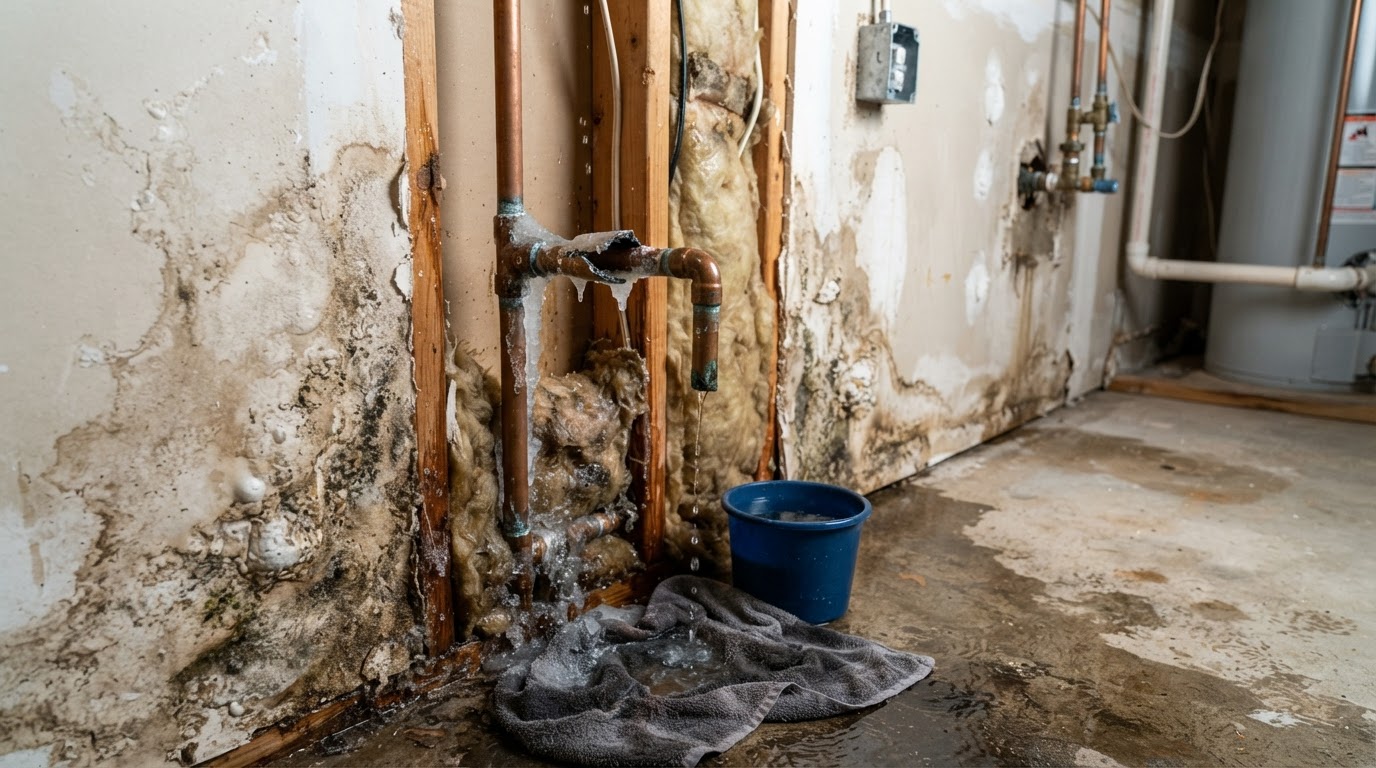
Frozen pipe and pipe freeze water damage cleanup in Wilmington, NC addresses the damage that occurs when a plumbing pipe freezes, expands, and bursts—releasing water into walls, ceilings, floors, and crawl spaces. While freezing temperatures are less frequent in coastal North Carolina than in colder climates, occasional cold snaps can still cause pipe failures. Our team removes the standing water, traces how far moisture has migrated, and sets up controlled drying for affected materials.
How Frozen Pipe Water Damage Occurs in the Wilmington Area
When water inside a plumbing pipe freezes, it expands. That expansion can split the pipe wall or crack a fitting, creating a breach that releases water once the ice thaws and flow resumes. A key characteristic of frozen pipe damage is that the leak may not appear immediately—water can freeze and split the pipe overnight, and the actual water release begins only when temperatures rise and the ice melts. This delayed onset can mean a pipe fails and floods a space while no one expects active water damage.
In the Wilmington area, freezing temperatures are less frequent than in colder climates, but occasional cold snaps during winter months can still cause pipe failures. Pipes most at risk are those in exposed or under-insulated locations—exterior wall cavities, crawl spaces, attics, and lines running along the perimeter of a building. When cold air reaches these pipes, the water inside can freeze even when interior spaces remain warm.
The damage from a burst frozen pipe depends on where the pipe is located. A pipe inside a wall cavity can leak into the insulation, base plates, and drywall. A pipe in a ceiling can saturate ceiling drywall and the floor above. A pipe in a crawl space can flood the crawl space and saturate the subfloor from below. Because the leak may start when the pipe thaws, the water can flow for an extended period before it is discovered.
Freezing & Expansion
Water inside a pipe freezes and expands, which can split the pipe wall or crack a fitting and create a breach that releases water when the ice thaws.
Delayed Leaks on Thawing
A frozen pipe may split overnight but not leak until temperatures rise and the ice melts, meaning water can begin flowing unexpectedly.
Exposed & Under-Insulated Pipes
Pipes in exterior wall cavities, crawl spaces, attics, and along building perimeters are most at risk when cold air reaches the plumbing.
Water Into Walls, Ceilings & Floors
Depending on the pipe's location, a burst can send water into wall cavities, ceiling assemblies, flooring, or the crawl space below.
Our Frozen Pipe Water Cleanup Process Near Wilmington, NC
After a frozen pipe bursts and releases water, the cleanup process focuses on removing the standing water and addressing moisture that has migrated into walls, ceilings, floors, or crawl spaces. The burst pipe should be repaired before or alongside cleanup by the appropriate qualified plumbing trade. Our work addresses the resulting water damage.
Evaluate the Water Loss
We assess the visible water, the location of the burst pipe, and whether moisture has migrated into wall cavities, ceilings, flooring, or the crawl space.
Confirm the Source Is Repaired
Water cleanup proceeds once the burst pipe is repaired or the supply is shut off by the appropriate qualified plumbing trade.
Remove Standing Water
Extraction equipment removes visible water from flooring and any accessible areas where the burst pipe released water.
Inspect Moisture Migration
Moisture meters check wall cavities, ceilings, flooring, the subfloor, and crawl spaces to locate hidden water that has traveled from the burst pipe.
Establish Drying Conditions
Air movers and dehumidifiers are positioned to encourage controlled evaporation from wet drywall, framing, flooring, and subfloor materials.
Monitor Structural Materials
Moisture readings are tracked over time so the drying strategy can be adjusted as walls, ceilings, and floors release moisture.
Complete Final Moisture Evaluation
Equipment is removed once affected materials reach appropriate moisture levels based on comparison readings from unaffected areas.
Where Frozen Pipe Water Travels in a Wilmington Property
A burst frozen pipe can send water into several hidden areas depending on its location. A pipe inside an exterior wall cavity leaks into the insulation, base plates, and drywall, where water travels downward through the cavity to the floor. A pipe in a ceiling saturates the ceiling drywall and can travel along framing into the floor above or the wall below. A pipe in a crawl space floods the crawl space and saturates the subfloor from below.
Because frozen pipes often fail in exterior walls, crawl spaces, and attics—locations with limited airflow—the water that enters those assemblies lingers in the materials. Wall cavities sealed by drywall hold moisture against insulation and base plates. Crawl spaces with standing water keep the subfloor and joists damp from below. The visible water is often a fraction of what has migrated into hidden materials.
Moisture detection maps the full extent of the loss. Readings in wall cavities, on ceiling drywall, across flooring and the subfloor, and in the crawl space show whether water has traveled beyond the visible area. Not every wet material can always be saved—saturated insulation, swollen drywall, or warped flooring may require removal based on their condition. We do not repair pipes; that is handled by the appropriate qualified plumbing trade.
Frozen Pipe Water Damage FAQs for Wilmington Homeowners
Need Frozen Pipe Water Damage Cleanup in Wilmington, NC?
If a frozen pipe has burst and caused water damage to your walls, ceilings, or floors, call to check current service availability. From water removal to structural drying, our Wilmington team can help.