Roof Leak Water Damage Cleanup in Wilmington, NC
Roof leak water damage cleanup in Wilmington, NC addresses the interior water damage that results when rainwater enters through a roof breach and travels into attics, ceilings, walls, and insulation. Because roof water follows framing and gravity, the visible stain inside often appears far from the actual entry point. Our team focuses on the interior restoration—tracing where moisture has migrated, removing standing water, and drying affected ceiling, wall, and insulation materials.
How Roof Leaks Create Interior Water Damage in Wilmington Homes
Roof leaks are a common source of interior water damage in coastal North Carolina, where heavy rainfall, tropical weather, and wind-driven rain can stress roofing systems. When water enters through a roof breach—whether from storm damage, an aging roof system, or a failed flashing—it does not simply fall straight down. It enters the attic, soaks into insulation, and travels along framing members and the underside of the roof deck before reaching the ceiling drywall below.
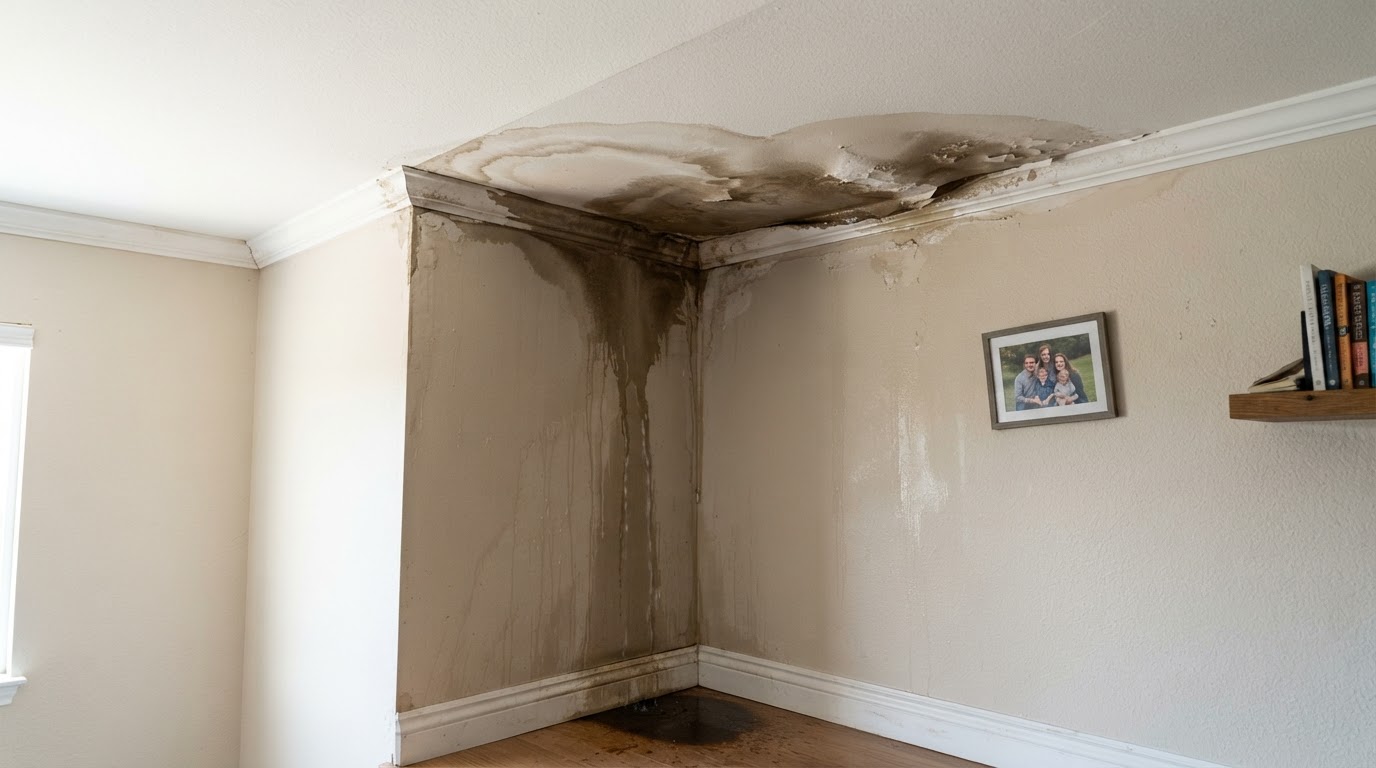
Because water follows framing and gravity, the visible stain inside the home often appears some distance from where the water actually entered the roof. A leak near a roof valley may produce a stain on a ceiling far from the exterior wall. Water can also travel down wall cavities along framing, appearing as a stain or soft spot on an interior wall. This makes locating the full extent of the damage a key part of the cleanup process.
Common warning signs of roof-related interior water damage include a discolored ceiling stain, bubbling or peeling paint, a soft or sagging area of drywall, a dripping sound or active drip during rain, and a musty odor in the attic or upper floor. Because the water enters from above, insulation in the attic and ceiling cavity is often saturated before any visible sign appears inside the living space.
Storm-Related Roof Openings
Wind, debris, and heavy rain during coastal storms can create openings in the roof that allow water to enter the attic and ceiling assembly.
Roof System Aging
An aging roof system with degraded underlayment, failed flashing, or worn coverings can allow rainwater to penetrate during heavy rainfall.
Water Traveling Along Framing
Water that enters the attic travels along rafters and the underside of the roof deck, often appearing as interior damage far from the entry point.
Attic Insulation Saturation
Insulation in the attic and ceiling cavity absorbs roof water first, holding moisture that can then reach the ceiling drywall below.
Our Interior Roof Leak Water Cleanup Process Near Wilmington, NC
After a roof leak causes interior water damage, the cleanup process focuses on the interior—tracing where moisture has migrated, removing standing water, and drying affected materials. The roof itself must be repaired before or alongside cleanup by the appropriate qualified roofing trade. Our work addresses the resulting interior water damage.
Evaluate the Interior Water Loss
We assess the visible interior damage, the likely path of the water, and whether moisture has spread through the attic, ceiling, or wall cavities.
Confirm the Roof Is Addressed
Interior cleanup proceeds once the roof is repaired or tarped by the appropriate qualified trade. Our work addresses the water damage inside the structure.
Remove Standing Water Where Present
Any pooled water in the attic, ceiling cavity, or active drips are addressed before drying of the interior materials begins.
Inspect Moisture Migration
Moisture meters map the ceiling drywall, attic insulation, wall cavities, and framing to locate hidden water that has traveled from the roof entry point.
Establish Drying Conditions
Air movers and dehumidifiers are positioned to encourage controlled evaporation from wet ceiling drywall, insulation, and framing.
Monitor Structural Materials
Moisture readings are tracked over time so the drying strategy can be adjusted as ceiling and attic materials release moisture.
Complete Final Moisture Evaluation
Equipment is removed once affected materials reach appropriate moisture levels based on comparison readings from unaffected areas.
Where Roof Leak Water Travels Inside a Wilmington Property
Roof water is unpredictable inside a structure. Once it enters the attic, it soaks into insulation and travels along framing—the underside of the roof deck, rafters, and ceiling joists. Because framing members are continuous, water can follow them for some distance before dropping onto the ceiling drywall below. The visible stain inside often appears at a low point in the ceiling far from where the water entered the roof.
Insulation in the attic and ceiling cavity is usually the first material to saturate. Wet insulation compresses, loses effectiveness, and holds moisture against the ceiling drywall and framing. In some cases, saturated insulation cannot be effectively dried and requires removal. The ceiling drywall below absorbs water slowly, and bubbling paint, a soft spot, or sagging are signs it has taken on substantial moisture.
Water can also travel down wall cavities along framing, appearing as a stain or soft spot on an interior wall. Moisture detection maps the full extent of the loss—readings across the ceiling, into the attic, and along walls show whether water has traveled beyond the visible stain. Not every wet material can always be saved; decisions are based on each material's condition.
Roof Leak Water Damage FAQs for Wilmington Property Owners
Need Roof Leak Water Damage Cleanup in Wilmington, NC?
If a roof leak has caused interior ceiling, wall, or attic water damage, call to check current service availability. From moisture detection to structural drying, our Wilmington team can help address the interior loss.