Crawl Space Water Damage & Structural Drying in Wilmington, NC
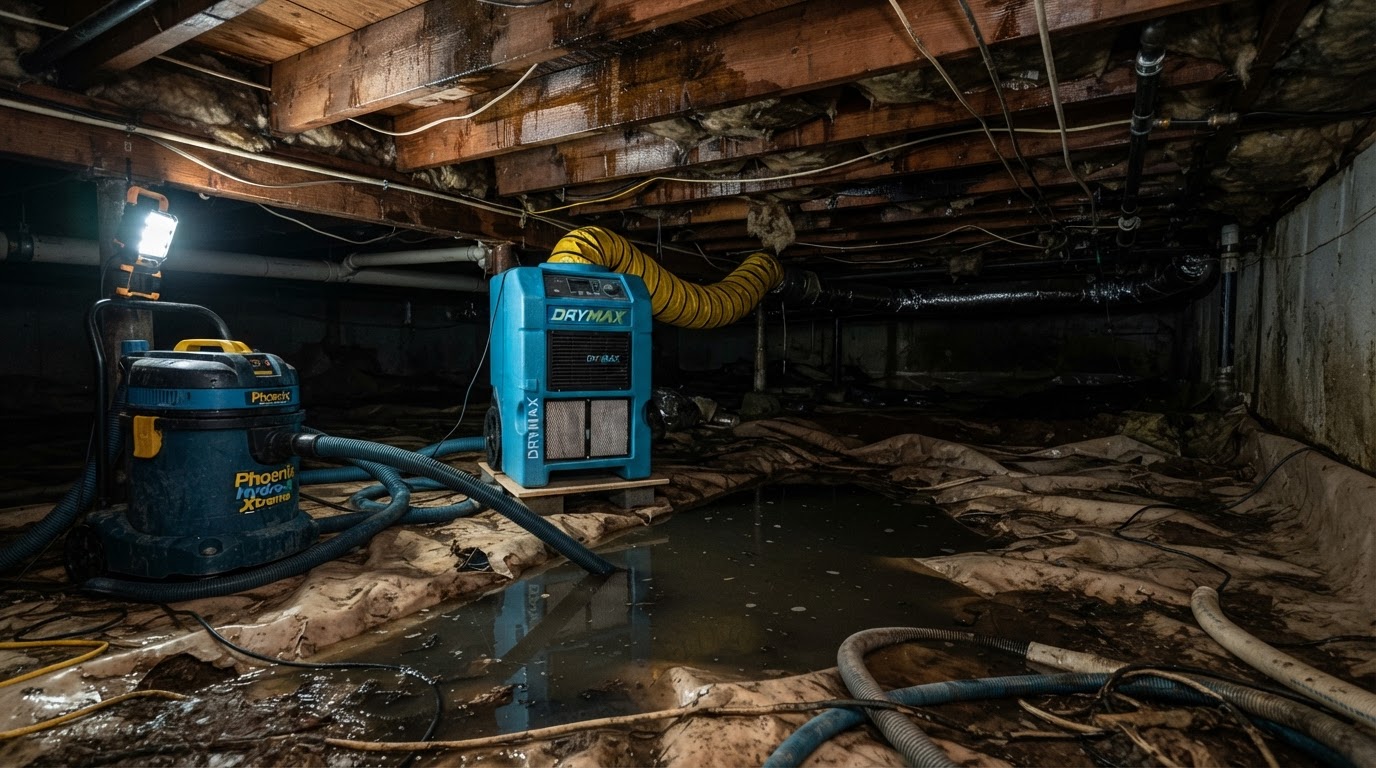
Crawl space water damage and structural drying in Wilmington, NC addresses the standing water and elevated moisture that can collect beneath a home after a plumbing leak, heavy rain, groundwater intrusion, or HVAC condensate drainage. Because crawl spaces contain the floor joists and subfloor that support the living space above, water there can saturate structural wood and insulation from below. Our team removes the standing water, inspects the framing and subfloor for moisture, and sets up controlled drying for the crawl space assembly.
What Causes Crawl Space Water Damage Near Wilmington, NC?
A crawl space sits between the ground and the first floor of a home, containing the floor joists, subfloor, plumbing lines, and often insulation and a vapor barrier. When water enters that space—whether from a plumbing leak, heavy rain, groundwater, or HVAC condensate—it pools on the vapor barrier or ground and saturates the structural wood above it. Because crawl spaces have limited airflow and are not visited daily, the water can go unnoticed for an extended period.
Several sources can introduce water into a crawl space. A plumbing leak in a line running through the crawl space can release water continuously. Heavy rainfall and saturated ground can allow water to enter through the foundation vents or walls. An HVAC condensate drain that discharges into the crawl space can add steady moisture. In Wilmington's humid coastal climate, elevated humidity alone can keep crawl space materials damp even without standing water.
The primary concern with crawl space water is the structural wood. Floor joists, the subfloor above, and insulation can absorb water from below. Wet insulation holds moisture against the subfloor, keeping it damp for an extended period. Over time, saturated wood framing can weaken, and persistent dampness can create conditions favorable to microbial growth. Identifying which materials have taken on moisture is a central part of the cleanup process.
Plumbing Leaks Beneath the Floor
A plumbing line running through the crawl space can leak or fail, releasing water that pools on the vapor barrier and saturates the framing above.
Heavy Rain & Groundwater
Heavy rainfall and saturated ground can allow water to enter the crawl space through foundation vents or walls, pooling beneath the home.
HVAC Condensate Drainage
An HVAC condensate drain that discharges into the crawl space can add steady moisture, keeping the space damp over time.
Elevated Humidity
In a humid coastal climate, elevated humidity alone can keep crawl space framing, insulation, and the subfloor damp even without standing water.
Our Crawl Space Water Cleanup & Drying Process in Wilmington, NC
After water is discovered in a crawl space, the cleanup process focuses on removing the standing water and drying the framing, insulation, and subfloor. The source of the water—whether a plumbing, drainage, or HVAC issue—should be stopped or repaired before or alongside cleanup by the appropriate qualified trade. Our work addresses the resulting water damage.
Evaluate the Water Loss
We assess the standing water, the likely source, and whether moisture has saturated the floor joists, subfloor, or insulation above the water line.
Confirm the Source Is Addressed
Water cleanup proceeds once the source—a plumbing, drainage, or HVAC issue—is stopped or repaired by the appropriate qualified trade.
Remove Standing Water
Extraction equipment removes the pooled water from the vapor barrier or ground surface so that drying of the framing and subfloor can begin.
Inspect Moisture Migration
Moisture meters check the floor joists, subfloor, and insulation to determine how far water has wicked upward into the structural wood.
Establish Drying Conditions
Air movers and dehumidifiers are positioned in the crawl space to encourage controlled evaporation from wet framing, insulation, and the subfloor.
Monitor Structural Materials
Moisture readings are tracked over time so the drying strategy can be adjusted as joists and the subfloor release moisture.
Complete Final Moisture Evaluation
Equipment is removed once affected materials reach appropriate moisture levels based on comparison readings from unaffected framing.
Why Crawl Space Moisture Affects the Subfloor Above
Crawl space water damage is a bottom-up problem. The standing water sits beneath the floor joists, and those joists—along with the subfloor above them and any insulation between—absorb moisture from below. Wood framing wicks water upward through capillary action, so even after the standing water is removed, the joists and subfloor can remain wet for an extended period. Wet insulation pressed against the subfloor keeps that moisture trapped against the wood.
Because crawl spaces have limited airflow, natural drying is extremely slow. Without controlled air movement and dehumidification, moisture lingers in the framing and subfloor, and the humid environment can keep materials damp even after the visible water is gone. Persistent dampness in structural wood can create conditions favorable to microbial growth, which is one reason thorough drying matters.
Moisture detection maps the extent of the loss. Readings on the floor joists, the subfloor above, and the insulation show whether water has wicked beyond the immediate wet area. Not every wet material can always be saved—some saturated insulation may require removal to allow the subfloor and joists to dry. We do not perform encapsulation, waterproofing, or foundation repair; those are handled by the appropriate qualified trades.
Crawl Space Water Damage FAQs for Wilmington Property Owners
Need Crawl Space Water Damage Cleanup Near Wilmington?
If water has collected in your crawl space or saturated the framing beneath your home, call to check current service availability. From standing water removal to joist and subfloor drying, our Wilmington team can help.