Hardwood Floor & Subfloor Water Damage Drying in Wilmington, NC
Hardwood floor and subfloor water damage drying in Wilmington, NC addresses the moisture that enters wood flooring and the subfloor beneath after a plumbing leak, appliance failure, water heater leak, or bathroom overflow. Because hardwood is installed over a subfloor, water that enters the seams can saturate both the finished floor and the plywood beneath. Our team uses moisture detection to map the affected materials and sets up controlled drying, including specialty floor drying methods, to address the floor assembly.
Can Wet Hardwood Hide Moisture in the Subfloor in Wilmington Homes?
Hardwood flooring is installed over a subfloor—typically plywood or OSB—and the two layers together form a floor assembly. When water reaches that assembly, whether from a plumbing leak, appliance failure, water heater leak, or bathroom overflow, it enters through the seams between boards and soaks into both the hardwood and the subfloor beneath. Because the finished hardwood seals the top of the assembly, moisture trapped between the layers has nowhere to evaporate naturally.
Hardwood reacts visibly to water. As boards absorb moisture, they can cup—meaning the edges rise higher than the center—or crown, where the center rises. Boards may also warp, buckle, or develop darkened stains in the seams. These visible changes are signs that the wood has taken on substantial moisture, but they do not show how much water has reached the subfloor below.
The subfloor is the hidden concern. Water that passes through hardwood seams soaks into the plywood or OSB beneath, and because that subfloor is sealed above by the finished floor and below by the crawl space or ceiling, trapped moisture releases extremely slowly. A floor that feels dry to the touch can still have elevated moisture in the subfloor, which is why moisture meters that read both layers are essential.
Plumbing & Appliance Leaks
A plumbing leak, appliance failure, or water heater leak can release water across hardwood flooring, sending it through seams into the subfloor beneath.
Bathroom & Fixture Overflows
A bathroom overflow or fixture leak can send water into adjacent hardwood flooring, where it enters seams and reaches the subfloor.
Standing Water on Flooring
Standing water left on hardwood—even for a short period—enters seams and begins soaking into both the finished floor and the subfloor below.
Moisture Trapped Beneath
Because the finished floor seals the top of the assembly, moisture that reaches the subfloor remains trapped and releases slowly without controlled drying.
Our Hardwood & Subfloor Drying Process in Wilmington, NC
After water reaches hardwood flooring, the drying process focuses on mapping moisture in both the finished floor and the subfloor, then setting up controlled drying for the full assembly. The source of the water should be stopped or repaired before or alongside cleanup by the appropriate qualified trade. Our work addresses the resulting water damage.
Evaluate the Water Loss
We assess the visible damage—cupping, warping, staining—the flooring type, and whether water has reached the subfloor beneath the hardwood.
Confirm the Source Is Stopped
Water cleanup proceeds once the source—a plumbing, appliance, or fixture issue—is stopped or repaired by the appropriate qualified trade.
Remove Standing Water
Extraction equipment removes any visible water from the floor surface before drying of the hardwood and subfloor begins.
Map Floor & Subfloor Moisture
Moisture meters read both the hardwood surface and the subfloor beneath to determine how far water has traveled through the assembly.
Establish Drying Conditions
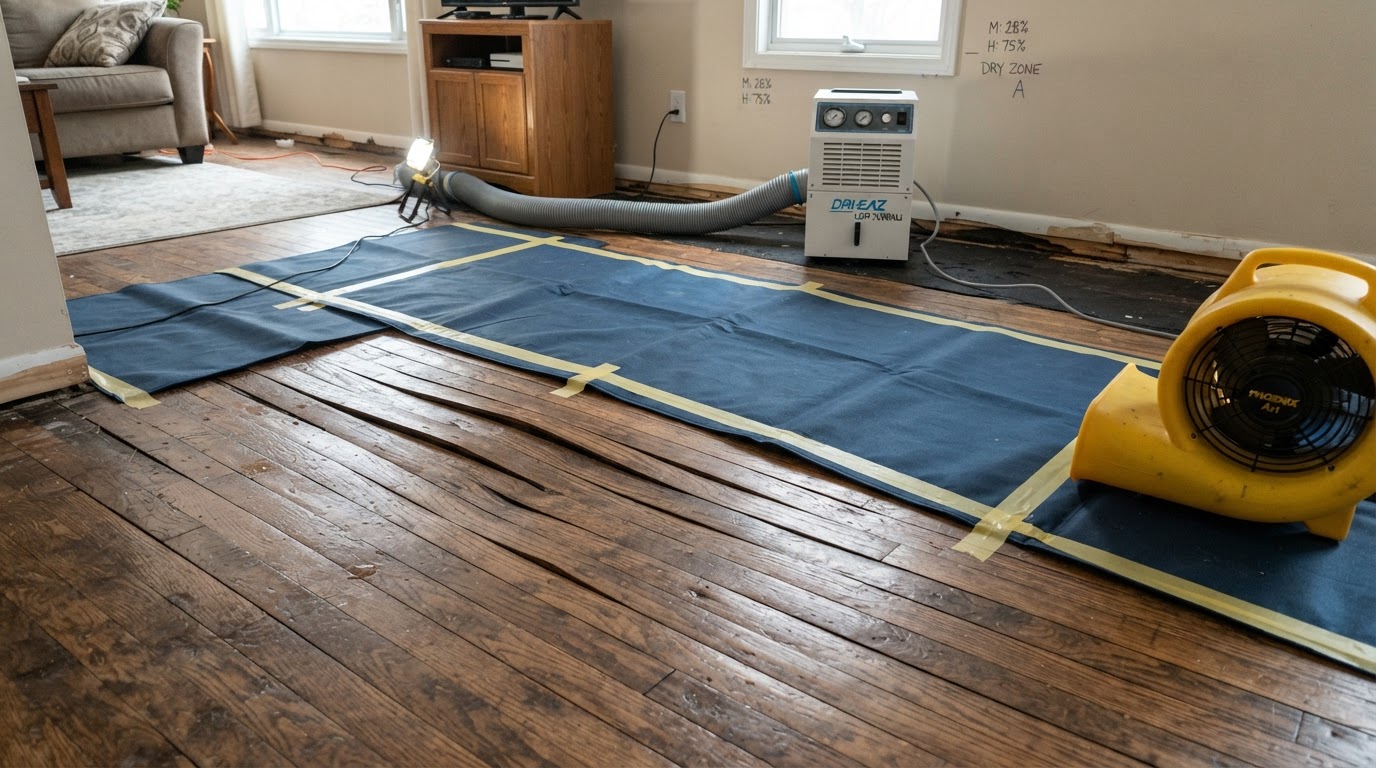
Specialty floor drying mats, air movers, and dehumidifiers are positioned to draw moisture out of the hardwood and subfloor from above and below.
Monitor the Floor Assembly
Moisture readings are tracked over time so the drying strategy can be adjusted as the hardwood and subfloor release moisture.
Complete Final Moisture Evaluation
Equipment is removed once both the hardwood and subfloor reach appropriate moisture levels based on comparison readings from unaffected flooring.
Why Hardwood & Subfloor Drying Requires Specialty Methods
Drying a hardwood floor assembly is different from drying a flat surface. Water that enters the seams between boards soaks into both the hardwood and the subfloor beneath, and because the finished floor seals the top of the assembly, that trapped moisture cannot evaporate naturally. Simply running a fan across the surface addresses only the top layer, leaving elevated moisture in the subfloor below.
Specialty floor drying methods help address both layers. Floor drying mats—sealed panels that draw moisture out through the boards—and dehumidifiers that manage the ambient air work together to pull moisture from the hardwood and the subfloor. In some cases, drying from below, through the crawl space or ceiling beneath, helps address the underside of the subfloor. Moisture meters that read at depth confirm whether both layers are reaching appropriate levels.
Not every wet hardwood floor can be saved. Severely cupped, buckled, or warped boards may require replacement, and in cases where the subfloor has been saturated for an extended period, sections of the subfloor may need removal and replacement. The decision depends on the extent of the damage, how long the materials were wet, and whether the wood can return to appropriate moisture levels through controlled drying.
Hardwood & Subfloor Water Damage FAQs for Wilmington Homeowners
Need Wet Hardwood Floor Drying in Wilmington, NC?
If water has reached your hardwood floors or the subfloor beneath, call to check current service availability. From moisture mapping to specialty floor drying, our Wilmington team can help.