Bathroom Water Damage Cleanup in Wilmington, NC
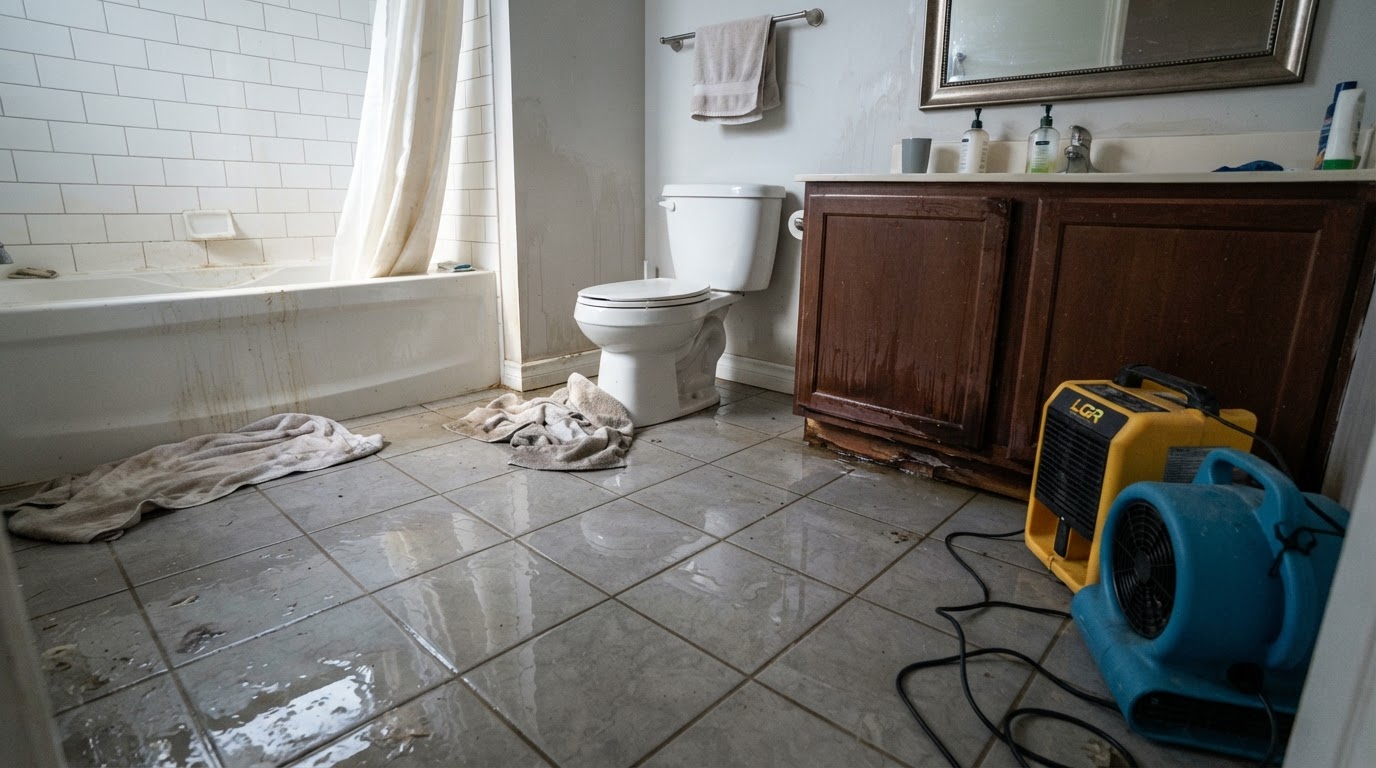
Bathroom water damage cleanup in Wilmington, NC addresses water from toilet overflows, tub overflows, shower leaks, failed supply lines, and vanity leaks. Bathrooms combine plumbing fixtures, tile, and water in a small space, so a failure can quickly saturate flooring, subflooring, and drywall. Our team determines the water source category, extracts water, inspects beneath tile and behind walls, and begins controlled drying for Wilmington properties.
Common Bathroom Water Damage Problems in Wilmington, NC
Bathrooms are dense with plumbing. A single room may have a toilet, tub, shower, sink, and multiple supply lines, each a potential source of water loss. A toilet overflow, a tub that overfills, a shower pan that leaks, or a failed supply line under the vanity can each release water that spreads across tile flooring and into the materials beneath. The source matters because contamination level depends on where the water came from.
It's important not to confuse every toilet overflow with sewage contamination. A toilet that overflows with clean rinse water from the bowl refill is different from a toilet that backs up with waste-containing water. Contamination level depends on the source and circumstances, and that determination shapes whether materials can be dried in place or require the sanitation precautions used for contaminated water. This is why source category is evaluated early in the process.
Bathroom water often travels where it isn't visible. Water beneath tile saturates the subfloor and underlayment below, hidden by the waterproof tile surface above. Leaks behind walls—from a shower valve or supply line—saturate drywall and framing inside the cavity. And a tub or shower overflow on an upper floor can affect the ceiling of the room below. If it is safe and you know how, shutting off the supply valve to the leaking fixture can limit further water release.
Toilet Overflows
A toilet can overflow from a fill valve malfunction or a drain blockage. Contamination level depends on whether the water contains waste, which determines cleanup precautions.
Tub & Shower Leaks
A tub that overfills, a failed shower pan, or a leaking shower valve can release water across flooring and behind walls into the framing and subfloor.
Failed Supply Lines
Supply lines to the toilet or vanity can fail and release pressurized water, spreading rapidly across the bathroom floor and into adjacent rooms.
Vanity & Sink Leaks
Leaks under the vanity from drain fittings or supply lines can saturate the cabinet base and flooring beneath, often hidden from view.
Our Bathroom Water Cleanup Process Near Wilmington, NC
Bathroom water cleanup follows a sequence that begins with determining the source category, then moves through extraction, inspection of subfloors and walls, contamination precautions where needed, and drying. Because bathroom water often hides beneath tile, detection is central.
Determine Source Category
We identify the water source and its contamination level—clean water versus contaminated water—since that determination shapes whether materials can be dried in place or require sanitation precautions.
Extract Water
Extraction equipment removes standing water from tile flooring and low areas, halting further absorption into the subfloor and underlayment beneath.
Inspect Flooring, Walls & Subfloor
We inspect beneath tile for subfloor saturation, behind walls for cavity moisture, and the ceiling below if the bathroom is on an upper floor.
Address Contamination Precautions
Where the source is contaminated, appropriate sanitation and material-removal precautions are applied, consistent with how contaminated water is handled.
Dry Materials
Air movers and dehumidifiers draw moisture out of saturated subflooring, drywall, and framing, with equipment directed at the detected moisture footprint.
Monitor Moisture
Daily moisture readings track drying progress on subfloors, walls, and ceilings until materials reach acceptable levels verified against dry baselines.
Why Water Hides Beneath Bathroom Tile in Wilmington Homes
Bathroom tile is waterproof on the surface, which is exactly why it can hide water damage beneath. Water that seeps through grout lines, a failed shower pan, or a toilet seal travels beneath the tile into the underlayment and subfloor below. The tile surface above looks intact while the structure underneath saturates. This is one of the most common sources of hidden moisture in bathrooms.
Subflooring in bathrooms is especially vulnerable because it sits beneath tile and around the toilet flange, tub drain, and shower pan—every point where plumbing penetrates the floor. A slow leak at any of these points saturates the subfloor over time, hidden by the tile above. Moisture meters and infrared imaging locate that hidden moisture so drying targets the real problem rather than the visible surface.
When the source is contaminated, bathroom cleanup overlaps with sewage backup cleanup and its sanitation precautions. When water has migrated through wall cavities or ceilings, hidden water damage cleanup may apply. Bathroom losses also commonly require structural drying and emergency water extraction. For overflow-specific scenarios, see our sink, bathtub, and shower overflow cleanup page. See our water damage restoration homepage for the full scope.
Bathroom Water Damage Cleanup FAQs for Wilmington Property Owners
Need Bathroom Water Damage Cleanup Near Wilmington?
If a toilet, tub, or shower has caused a bathroom water loss, call to check current service availability. From source-category evaluation to subfloor drying, our Wilmington team can help.