HVAC & Appliance Leak Cleanup in Wilmington, NC
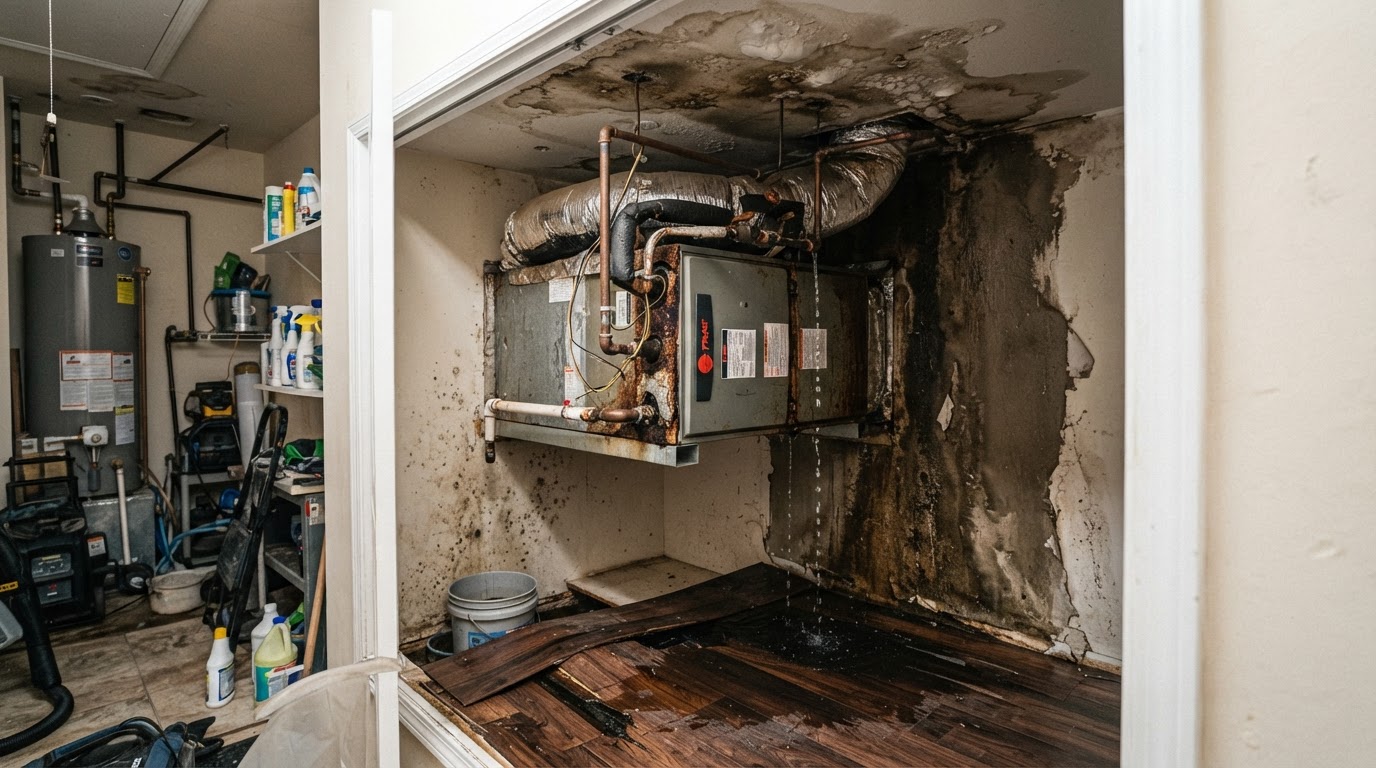
HVAC water damage cleanup in Wilmington, NC addresses water from clogged condensate drain lines, drain pan overflows, air handler leaks, and appliance supply line failures. Because HVAC systems are often located in utility closets or attics, condensate leaks can travel through ceilings and walls before they are discovered. Our team identifies affected areas around and below equipment, removes water, and begins controlled drying for Wilmington properties.
Signs of HVAC Condensate Water Damage Near Wilmington
Air conditioning systems remove humidity from the air, and that moisture—condensate—has to drain somewhere. When the condensate drain line clogs or the drain pan overflows, water releases inside or around the air handler. Because many HVAC units sit in attics, utility closets, or above ceilings, that water travels through building assemblies before it becomes visible in the living space below.
The signs can be subtle at first. A ceiling stain beneath an attic air handler, a damp utility closet floor, or water near the indoor unit all point to condensate or air handler leaks. Because these leaks can be slow and intermittent—active only when the system runs—they may cause hidden damage over time before the source is identified. By the time water is visible on a ceiling, the drywall and insulation above may already be saturated.
HVAC equipment repair itself is a separate trade; our focus is the water damage the leak has caused. If it is safe and you know how, shutting off the HVAC system can stop further condensate production. Avoid water near electrical components, since air handlers and nearby wiring present electrical hazards in wet conditions.
Clogged Condensate Drains
Algae, debris, and sediment can clog the condensate drain line, causing water to back up and overflow from the drain pan.
Drain Pan Overflow
A rusted, cracked, or misaligned drain pan can allow condensate to spill over the edge and onto surrounding surfaces.
Air Handler Leaks
Condensation or leaks from the air handler cabinet can drip onto flooring or, in attic installations, through the ceiling below.
Appliance Supply Leaks
Supply lines to refrigerators, ice makers, and other appliances can fail and release water that travels into hidden cavities.
Our HVAC Leak Cleanup Process in Wilmington, NC
After the HVAC system is shut off, HVAC leak cleanup follows a sequence that identifies affected areas around and below the equipment, removes water, locates moisture migration, and dries structural materials. Because condensate leaks travel through ceilings and walls, detection drives the process.
Identify Affected Areas Around & Below Equipment
We map every area affected by the condensate or air handler leak, including ceilings and walls below attic units and flooring around utility closet systems.
Remove Water
Extraction equipment removes standing water from flooring, ceiling surfaces, and low areas around the affected equipment.
Inspect Ceilings, Walls & Floors
We inspect ceiling drywall, wall cavities, and floor assemblies for moisture that has traveled from the leak source through building materials.
Locate Moisture Migration
Moisture meters and infrared imaging trace how far water has traveled from the air handler or drain pan through ceilings, walls, and insulation.
Dry Structural Materials
Air movers and dehumidifiers draw moisture out of saturated ceiling drywall, insulation, and framing throughout the drying period.
Monitor Moisture
Daily moisture readings track drying progress in ceilings, walls, and floors until materials reach acceptable levels verified against dry baselines.
How HVAC Condensate Travels Through Ceilings in Wilmington Homes
HVAC condensate leaks are deceptive because the source and the visible damage are often in different places. An air handler in an attic leaks water that travels down through ceiling drywall and insulation, appearing as a stain in the room below—sometimes far from where the water actually entered. The ceiling stain is a symptom; the saturated insulation and drywall above it are the real moisture footprint.
Ceiling drywall absorbs water from above and can sag or weaken before any visible drip appears. Insulation above the ceiling acts like a sponge, holding water that slowly saturates the drywall below over time. Because the leak may be intermittent—only active when the system runs—moisture can accumulate gradually, making detection and moisture mapping essential to locate the full extent of the damage.
HVAC equipment repair is handled by a qualified HVAC technician; our role begins once the leak is stopped. HVAC leak cleanup often overlaps with structural drying and emergency water extraction. When condensate has traveled through ceiling and wall cavities, hidden water damage cleanup applies. For related appliance losses, see washing machine overflow cleanup, dishwasher leak cleanup, refrigerator and ice maker line leaks, and AC drain line overflow cleanup.
HVAC & Appliance Leak Cleanup FAQs for Wilmington Property Owners
Need HVAC Leak Water Cleanup in Wilmington?
If an AC drain line, air handler, or appliance has caused a water loss, call to check current service availability. From water removal to ceiling and wall drying, our Wilmington team can help.