Water Heater Leak Cleanup in Wilmington, NC
Water heater leak cleanup in Wilmington, NC addresses water from tank failures, supply line leaks, pressure and valve issues, and slow leaks that develop over time. Because water heaters often sit in utility closets, garages, or interior closets, a leak can saturate flooring, drywall, and baseboards before it is discovered. Our team addresses water accumulation, inspects flooring and walls, extracts water, checks for hidden moisture, and begins controlled drying for Wilmington properties.
Signs of a Water Heater Leak in Wilmington Homes
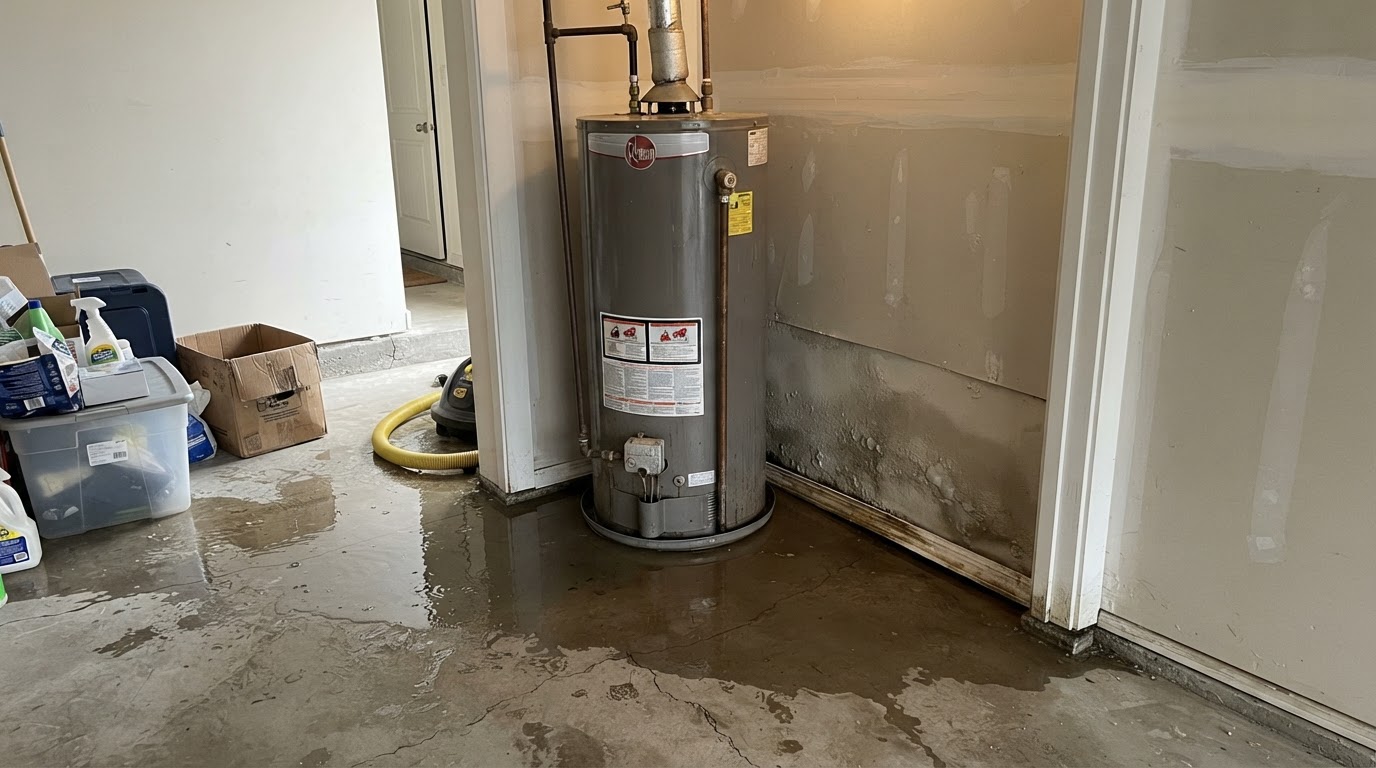
Water heaters hold dozens of gallons, so a tank failure or supply line leak can release a significant volume of water quickly. A sudden tank release dumps the full contents at once, spreading across the floor and into adjacent rooms. A supply line leak to the heater can release pressurized water continuously until the valve is shut. Pressure and valve issues can cause slower leaks that develop over time, and because water heaters often sit in utility closets, garages, or interior corners, the water can saturate flooring, drywall, and baseboards before it is discovered.
The location of the water heater shapes how the damage spreads. A heater in a utility closet can leak into the drywall and subfloor of that closet and then into adjacent rooms. A heater in a garage can spread water across the garage floor and into the wall shared with the living space. An interior closet heater—common in some Wilmington homes—can leak into the flooring and baseboards of the closet and the room around it. In each case, the water travels beyond the immediate area around the tank.
If it is safe to do so and you know how, shutting off the supply valve to the water heater can stop an active leak from releasing more water. We do not provide instructions for electrical or gas water heater repairs, which should be handled by the appropriate qualified professional. Avoid water near electrical components, since water heaters and their surroundings often present electrical hazards in wet conditions.
Tank Failure
A tank failure can release the full contents of the water heater at once, spreading a large volume of water across the floor and into adjacent rooms quickly.
Supply Line Leaks
The supply line to the water heater can leak or fail, releasing pressurized water continuously until the valve is shut, often behind or beside the tank.
Pressure & Valve Issues
Pressure relief valves and drain valves can develop slow leaks that release water over time, saturating nearby materials before any visible pooling appears.
Slow Leaks in Hidden Locations
Because heaters often sit in utility closets, garages, or interior corners, slow leaks can saturate flooring, drywall, and baseboards before discovery.
Our Water Heater Leak Cleanup Process Near Wilmington, NC
After the water source is controlled, water heater leak cleanup follows a sequence that addresses water accumulation, inspects flooring and walls, extracts water, checks for hidden moisture, and dries affected assemblies. Because heater leaks often saturate materials beyond the visible water, inspection drives the process.
Address Water Accumulation
We assess the water that has accumulated around and beyond the water heater, including how far it has spread into adjacent rooms and along floor assemblies.
Inspect Flooring, Walls & Baseboards
We inspect the flooring, drywall, and baseboards around the heater and in adjacent areas for saturation, since water from a heater leak travels beyond the tank.
Extract Water
Extraction equipment removes standing water from flooring and low areas, halting ongoing absorption into subflooring, drywall, and the cavities behind baseboards.
Check Hidden Moisture
Moisture meters and infrared imaging check for moisture that has migrated beneath flooring and behind walls, beyond what visual inspection reveals.
Dry Affected Assemblies
Air movers and dehumidifiers draw moisture out of saturated subflooring, drywall, and baseboards, with equipment directed at the detected moisture footprint.
Monitor Conditions
Daily moisture readings track drying progress in flooring, walls, and baseboards until materials reach target levels verified against dry baselines.
How Water Heater Leaks Spread Beneath Wilmington Flooring
Water heater leaks spread beneath flooring because the water pools on the floor surface and then absorbs downward into the subflooring below. Flooring materials—whether tile, laminate, hardwood, or carpet—often trap moisture beneath them, so the subfloor can remain saturated long after the surface appears dry. This is particularly common with slow leaks that develop over time, where water seeps beneath the flooring around the heater and saturates the subfloor before any visible sign appears on the surface.
Drywall and baseboards around the water heater are also vulnerable. Water that pools against the base of a wall wicks upward into the drywall through capillary action, and the baseboards and the wall cavity behind them can saturate. In utility closets, the drywall on the shared wall with the living space can wick water from the closet side into the room beyond. Moisture meters check conditions inside these materials, since the surface often looks intact while the structure beneath is wet.
We do not diagnose the mechanical cause of the water heater failure beyond general educational wording; repairs to the heater itself are handled by a qualified plumber or technician. For related services, see our emergency water extraction and structural drying pages. Supply line failures are covered under burst pipe and plumbing leak cleanup, and where moisture migrated through walls, hidden water damage cleanup applies.
Water Heater Leak Cleanup FAQs for Wilmington Property Owners
Need Water Heater Leak Cleanup Near Wilmington?
If your water heater has leaked or failed, call to check current service availability. From water accumulation removal to hidden moisture inspection and structural drying, our Wilmington team can help.