Water Damage Restoration in Holly Ridge, NC
Water damage restoration in Holly Ridge, NC focuses on the plumbing, appliance, and storm-related losses that affect this Onslow County community near coastal corridors. Wilmington Water Damage Restoration provides water extraction, water cleanup, and structural drying for homes and properties in and around Holly Ridge, serving the area from Wilmington, NC 28403. The emphasis is prompt water removal, accurate moisture detection, and controlled drying of the materials water reaches.
Water Damage Problems for Holly Ridge Property Owners
Plumbing leaks and burst pipes are a leading source. A failed pipe joint, a corroded supply line, or a sudden break can release a large volume of water into floors, ceilings, and wall cavities, and the water can travel well beyond the room of origin. Plumbing leak cleanup addresses both sudden breaks and hidden leaks that have already migrated through building assemblies.
Storm-related water intrusion affects Holly Ridge too. Wind-driven rain and heavy rainfall can push water through roof openings, around windows and doors, and into wall cavities, leaving moisture behind after the visible leak stops. Roof water can travel down through ceiling drywall and insulation, sometimes appearing as a stain far from the actual entry point. Storm water damage restoration and roof and ceiling water damage cleanup trace that moisture and dry the assemblies it has reached.
Appliance and water heater failures add another source. A washing machine hose, dishwasher connection, or water heater failure can send water beneath appliances and into subflooring, sometimes with little visible evidence until staining or a soft spot appears. After any source, the question is how far water has migrated, which is why structural drying and moisture detection matter as much as the initial removal.
Plumbing Leaks
Failed pipe joints, corroded supply lines, and slow leaks behind walls release water into drywall, insulation, and subflooring, often with little visible evidence at first.
Storm & Rain Intrusion
Wind-driven rain and heavy rainfall can push water through roof openings and around openings, leaving moisture behind after the visible leak stops.
Appliance Overflows
Washing machine hoses, dishwasher connections, and refrigerator lines can fail or overflow, sending water beneath appliances and into subfloor assemblies.
Water Heater Failures
Tank leaks and supply-line breaks in utility closets or garages can spread water across flooring and into baseboards, drywall, and adjacent rooms.
Ceiling & Wall Moisture
Roof water can travel down through ceiling drywall and insulation, sometimes appearing as a stain away from the actual entry point.
Hidden Wall Moisture
Water inside a wall cavity can wet insulation and drywall with little surface evidence, which is why moisture meters help locate the full extent of a loss.
Water Damage Cleanup Services for Holly Ridge, NC
These 12 core services are available to Holly Ridge properties, with plumbing, storm, and appliance concerns reflected in how each is applied. Each card links to its full service page.
Burst Pipe & Plumbing Leak Cleanup
Water extraction and cavity drying for Holly Ridge burst pipes, supply-line breaks, and slow plumbing leaks that have migrated into walls, floors, or ceilings.
Learn MoreStorm & Hurricane Water Damage Restoration
Interior water mitigation for Holly Ridge homes after coastal storms, including drying of ceilings, walls, and flooring affected by wind-driven rain.
Learn MoreEmergency Water Removal & Water Extraction
High-capacity extraction of standing water from Holly Ridge homes and properties before moisture migrates farther into building materials.
Learn MoreWater Heater Leak Cleanup
Targeted extraction and drying for Holly Ridge water heater failures, including inspection of flooring, baseboards, and nearby drywall.
Learn MoreWashing Machine Overflow & Laundry Room Cleanup
Removal of standing wash water and drying of subfloor and adjacent drywall after Holly Ridge laundry room hose bursts, drain backups, or overflows.
Learn MoreStructural Drying & Dehumidification
Commercial dehumidifiers and air movers draw residual moisture out of Holly Ridge framing, subfloors, and drywall after standing water has been extracted.
Learn MoreRoof Leak, Ceiling, Wall & Hidden Water Damage Cleanup
Moisture metering and drying for Holly Ridge ceiling drywall, wall cavities, and insulation affected by roof leaks or hidden water pathways.
Learn MoreFlood Damage Cleanup
Standing water removal, affected-material evaluation, and controlled drying for Holly Ridge properties affected by heavy rainfall or exterior intrusion.
Learn MoreToilet Overflow, Shower & Bathroom Water Damage
Extraction and moisture inspection for Holly Ridge bathroom overflows and shower leaks, including subflooring and the ceiling below an upper bath.
Learn MoreSewage Backup & Black Water Cleanup
Containment, contaminated-water removal, and sanitation precautions for Holly Ridge sewer backups, with appropriate handling of porous materials.
Learn MoreAC/HVAC Condensate Drain Line & Appliance Leak Cleanup
Drying of ceilings, walls, and floor cavities in Holly Ridge homes saturated by clogged HVAC condensate drain lines or appliance supply leaks.
Learn MoreCommercial Water Damage Restoration
Scalable water extraction and drying for Holly Ridge commercial properties, coordinated logically around the affected areas.
Learn MoreOur Water Extraction and Drying Process Near Holly Ridge
Every water loss is different, so the process below is a framework rather than a fixed checklist. Water extraction removes the liquid you can see; structural drying addresses the moisture that remains inside porous building materials. For Holly Ridge, where plumbing and storm sources both play a role, moisture detection is central to finding the full extent.
Initial Water Damage Evaluation
We assess the affected area, the apparent source, and the amount of water present. If water may be in contact with electrical components, the area should be avoided until it is safe.
Identify the Affected Area and Source
Where practical, the source is identified so stopping or repairing it can occur before or alongside cleanup. Storm-related sources may require the area to be safe to access first.
Standing Water Extraction
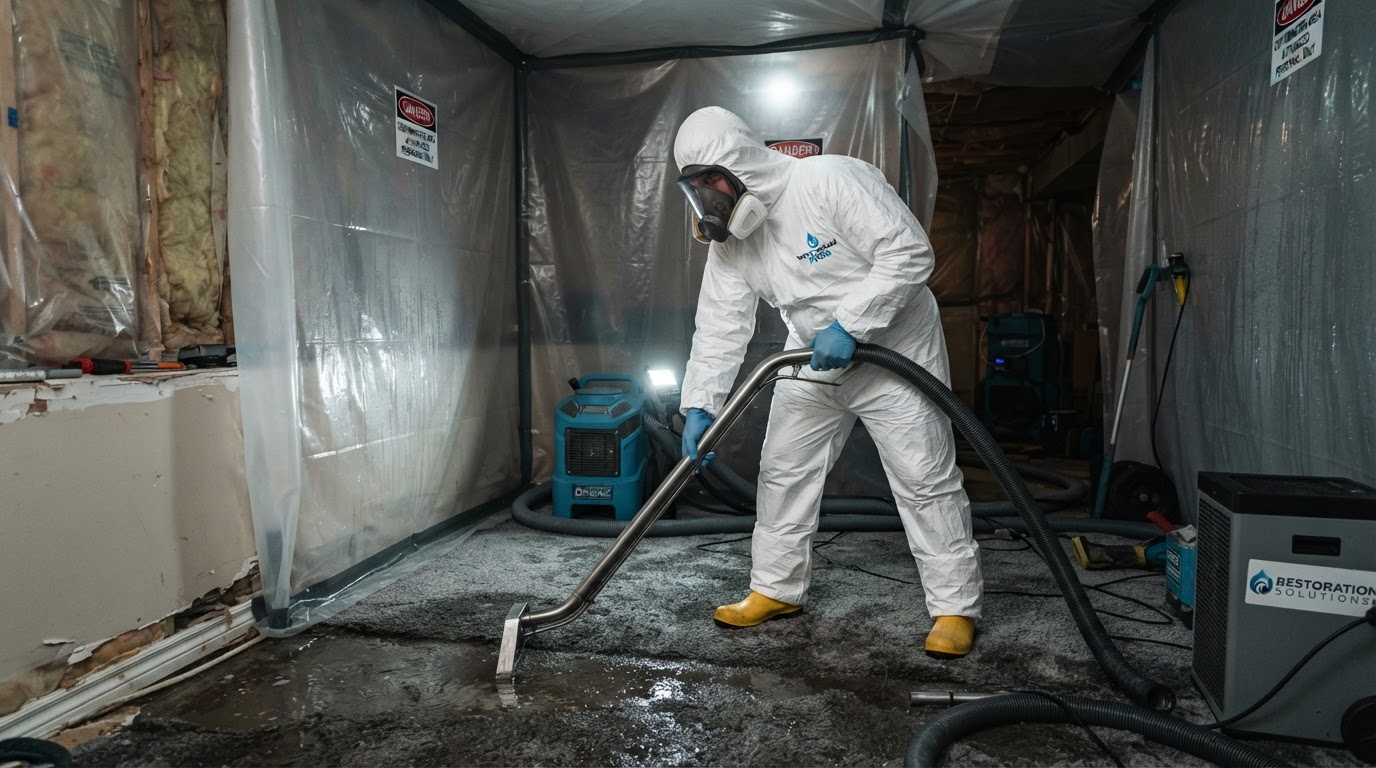
Commercial extraction equipment removes bulk water from flooring, carpet, and hard surfaces. Removing the source of ongoing absorption is the first priority.
Moisture Mapping and Detection
Moisture meters help locate water that has migrated into drywall, subfloors, and wall cavities beyond the visible wet area, establishing the true scope of the loss.
Air Movement and Dehumidification
Air movers increase controlled evaporation from wet materials, while dehumidifiers pull that moisture out of the air so it does not reabsorb into drying surfaces.
Structural Drying and Monitoring
Moisture is tracked over repeated visits so the drying strategy can be adjusted as conditions change. Equipment placement and run time depend on the materials and the extent of the loss.
Final Moisture Evaluation
Drying continues until moisture readings indicate affected materials have reached an appropriate dry standard. Not every wet material can always be saved, and some may require evaluation for removal.
Why Hidden Water Damage Matters in Holly Ridge Properties
Because Holly Ridge losses can come from both plumbing and storm sources, moisture often travels where it cannot be seen. A slow plumbing leak can wet insulation and the back of drywall with no surface evidence, and roof water can travel down through ceiling drywall and into a wall cavity. The visible puddle or stain is frequently only part of the loss by the time it is discovered.
Drywall wicks water upward through capillary action, insulation holds moisture against framing, and subflooring can stay damp beneath flooring that looks dry on top. Controlled air movement, dehumidification, and ongoing monitoring help draw that moisture back out of building materials so it does not linger. Moisture meters confirm when materials have reached an appropriate dry standard rather than relying on how a surface feels.
Some materials can be dried depending on the circumstances; others may require removal based on damage or contamination. Wet insulation inside a wall or ceiling, saturated drywall, or a subfloor that has stayed damp for an extended period may need evaluation. Persistent dampness can create conditions favorable to microbial growth, which is one reason thorough drying matters after any Holly Ridge water loss.
Professional Water Damage Help for Holly Ridge Homes and Properties
A complete restoration process matters because the visible water is only part of the loss. Professional water damage cleanup combines extraction equipment, moisture meters, air movers, and commercial dehumidifiers with a property-specific drying plan. For Holly Ridge, that plan accounts for both plumbing and storm sources and how far moisture has migrated into building assemblies.
Most Holly Ridge losses are residential. A burst pipe may require focused cavity drying, while a roof leak may need ceiling and wall-cavity drying. Contamination considerations, hidden moisture, and the source of the water all shape the restoration plan.
Wilmington Water Damage Restoration is based in Wilmington, NC 28403 and serves Holly Ridge and nearby communities including Surf City, Sneads Ferry, and Hampstead. The Wilmington water damage restoration homepage describes the full scope of services. If you are dealing with an active loss, call to check current service availability for water damage cleanup in Holly Ridge.
Water Damage Restoration FAQs for Holly Ridge, NC
Need Water Damage Restoration in Holly Ridge, NC?
From plumbing leak and storm water cleanup to water extraction and structural drying, call Wilmington Water Damage Restoration to check current service availability for your Holly Ridge property. We serve Holly Ridge and surrounding Onslow County communities from Wilmington, NC 28403.